
Calgary Home Types and What They Mean for Cleaning Needs
Explore Calgary home types and their unique cleaning needs. Find the right recurring or deep cleaning plan for your home today.
September 18, 2026
Calgary homes come in many shapes, sizes, and living arrangements. A downtown condo shared by one person has very different cleaning needs than a multigenerational house in a growing northeast community. A townhouse with three levels brings staircases and entryway traffic into the picture. An older detached home may have a finished basement, textured surfaces, and a mudroom that seems to collect half of Calgary every winter.
Property type matters, but it is not the whole story. The number of people in the home, how rooms are used, the presence of pets, and the amount of time spent at home usually matter just as much.
Calgary’s 2021 Census housing profile gives a useful starting point. The city had about 502,300 occupied private dwellings, with single-detached houses making up roughly 55% of them and apartments accounting for about 24%. The remaining housing mix includes many other forms, including townhouses and smaller multi-unit buildings.
Here is a practical look at how condos, townhouses, and detached homes often differ when it comes to residential cleaning, recurring schedules, and the scope of a deep clean.
Calgary’s Housing Mix at a Glance
Calgary’s population reached 1,306,780 in 2021, while the number of private dwellings grew to 531,062. Of those dwellings, 502,301 were occupied by usual or permanent residents.
The city’s homes are not distributed evenly across every neighbourhood. Apartments are concentrated in and around Greater Downtown, established communities, and selected newer areas in the south, northwest, and west. Single-detached homes are common across much of the city, particularly in suburban neighbourhoods.
Household size also changes by home type:
Calgary’s overall average household size was 2.6 people.
Single-detached homes averaged 3.0 people per household.
Apartments in buildings with five or more storeys averaged 1.6 people per household.
Those numbers do not tell us exactly how often people clean their homes. The census does not measure cleaning routines, cleaning budgets, pets, or floor plans. Still, they point to a simple reality: more occupants generally mean more daily use of kitchens, bathrooms, floors, laundry areas, and shared surfaces.
A small apartment can get messy quickly if one person works from home, cooks daily, and has a shedding dog. A large house can stay fairly manageable if it is occupied by two tidy adults who travel often. Cleaning needs are personal. Home type simply helps estimate the likely starting scope.
Condo and Apartment Cleaning: Smaller Footprint, Concentrated Use
Apartments made up nearly one-quarter of Calgary’s occupied private dwellings in 2021. They are especially common downtown, where many residents live in condos and rental buildings with elevators, underground parking, security desks, and shared entrances.
A condo may have less square footage than a detached house, but that does not automatically make it easy to clean. In a compact home, nearly every surface gets regular use. The kitchen is often close to the living space. A single bathroom may serve the entire household. Floors show dust, crumbs, pet hair, and winter grit quickly because there are fewer rooms to spread out daily activity.
What a typical condo cleaning visit may include
For many condos and apartments, routine home cleaning focuses on the core living areas:
Kitchen counters, sinks, cabinet fronts, stovetop surfaces, and appliance exteriors
Bathroom cleaning and disinfection
Vacuuming and mopping throughout the unit
Dusting furniture, ledges, and high-touch surfaces
Wiping door handles, light switches, and commonly used touchpoints
Emptying small household garbage and recycling where requested
The work is usually contained within one level, which can make the visit efficient. Yet access logistics can take time. A cleaner may need a fob, elevator booking, loading-zone instructions, visitor parking information, or permission from a concierge. These details are easy to overlook when comparing quotes for a Calgary cleaning service.
When a condo needs more frequent cleaning
Apartment households in high-rise buildings averaged 1.6 people, but many factors can increase the need for recurring home cleaning. Remote work is one. When people spend most of the day at home, kitchens and bathrooms get used more often, and dust accumulates around desks, electronics, and windows.
Pets are another major factor. A one-bedroom unit with a dog can need more frequent floor care than a larger two-storey home without pets. Frequent cooking, children, allergies, and regular entertaining also change the schedule.
For a lightly used condo, cleaning every two or four weeks may be enough. For a busy household, weekly support may make more sense. The floor plan matters less than the rhythm of daily life.
Townhouses: The Middle Ground With More Stairs
Townhouses occupy a useful middle position between condos and detached houses. Calgary’s census profile does not provide a separate citywide townhouse percentage, so it is best not to assign a number that the data does not support. Still, townhouses are common across the city and have a distinct cleaning profile.
They often provide more space than a condo while sharing some features with multi-unit housing. A townhouse may have an attached garage, a private entrance, a patio or balcony, several bedrooms, and two or more bathrooms. It may also have condominium association rules or designated visitor parking, even when it feels more like a house than an apartment.
The biggest difference is usually vertical space.
Stairs make a noticeable difference
Staircases are a small feature that create a surprising amount of work. They collect dust along edges, pet hair in corners, and scuff marks on risers. Vacuuming stairs carefully takes longer than vacuuming a flat floor. Carrying supplies between levels also adds time, particularly during a detailed deep cleaning.
A typical townhouse may include:
A main-floor kitchen and living room
Bedrooms upstairs
A basement recreation room, storage area, or guest space
One or more staircases
A garage-entry area that catches dirt, salt, and slush
That layout means the cleaning plan should be room-based and level-based. If time is limited, it is sensible to prioritize bathrooms, the kitchen, floors, and the main traffic routes rather than treating every room as equal.
Entryways deserve extra attention in Calgary
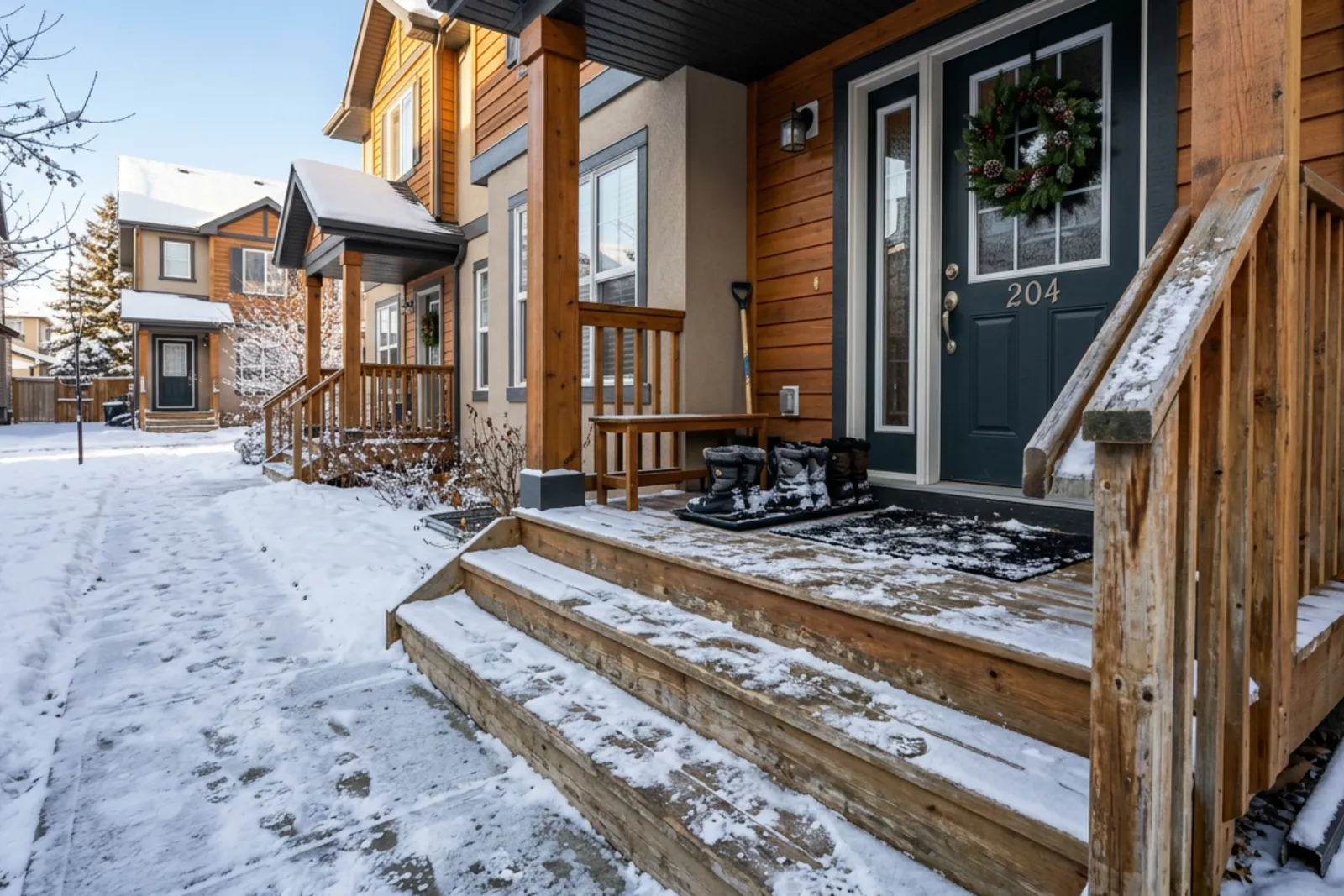
Calgary’s weather makes entry cleaning a practical concern for much of the year. Snow, sand, gravel, road salt, and mud travel indoors on boots and paws. In townhouse homes, the front hall and garage entry often absorb the mess first.
A durable mat helps, but it does not eliminate the need for regular vacuuming and mopping. Floors near entrances may need attention every week, even if bedrooms and formal living rooms can wait longer. This is especially true in homes with children, pets, or several drivers coming and going each day.
Detached Homes: More Space, More Variables
Single-detached homes are Calgary’s most common occupied dwelling type, making up about 55% of the city’s housing stock. They also had the highest average household size at 3.0 people.
That difference matters. A larger household tends to use more rooms, create more laundry, track in more outdoor debris, and put more pressure on shared spaces. The kitchen becomes busier. Bathrooms need more frequent attention. Floors get walked on constantly.
Still, square footage alone does not explain the full cleaning workload. A compact detached bungalow with two adults may be simpler to maintain than a large townhouse with three children, two pets, and a full-time home office.
Areas that expand the cleaning scope
Detached homes often include spaces that are less common in apartments:
Mudrooms and larger foyers
Finished or unfinished basements
Multiple staircases
Separate dining rooms, family rooms, and offices
Extra bedrooms and bathrooms
Laundry rooms and utility areas
Garages, decks, patios, and storage zones
These spaces are not always included in a standard cleaning checklist. A garage, for example, may need sweeping and basic organization support, but it is different work from routine bathroom cleaning. Basements also vary wildly. One may be a tidy guest suite, while another functions as a playroom, gym, storage room, and laundry area all at once.
The best approach is to define what is included before the first visit. Vague expectations create frustration for everyone.
Larger homes benefit from rotating detail work
Trying to deep clean every part of a large home during every recurring visit is usually unrealistic. It can also be inefficient. A better approach is to keep the core tasks consistent, then rotate detailed work.
One visit might include interior window ledges and baseboards in bedrooms. Another may focus on cabinet fronts, doors, light fixtures, or the basement bathroom. This keeps the home maintained without turning each appointment into a major project.
A regular maintenance clean is designed to preserve an already manageable home. A deep cleaning is different. It takes more time because it addresses built-up soil, overlooked edges, interior appliances, detailed dusting, and areas that do not receive routine attention.
Household Composition Changes the Cleaning Plan
Calgary had 132,690 one-person households in 2021, alongside 17,040 multigenerational households. Those two living arrangements can have completely different cleaning needs, regardless of the building type.
A person living alone may generate less daily mess, but their home could still need help with physical tasks such as vacuuming, bathrooms, or reaching high surfaces. Some people also prefer regular cleaning because they value their free time, not because their home is unusually dirty.
Multigenerational households can involve more bedrooms, more cooking, more laundry, and heavier use of bathrooms and common rooms. In some homes, several adults share meal preparation and childcare. The kitchen may need near-daily attention.
Calgary also had many families with children. About 44% of census families had three or four people, while roughly 9% had five or more. Larger families often benefit from a cleaning schedule that concentrates on the rooms everyone shares. There is no point spending too much time polishing a formal room while the kitchen floor, main bathroom, and entryway are carrying the real workload.
Older Homes and Newer Communities Need Different Attention
Established Calgary communities often contain a mix of apartments, older detached homes, duplexes, and townhouses. Older homes can have uneven floor plans, original woodwork, finished basements, and materials that need a more careful touch.
Natural stone, hardwood, specialty tile, painted millwork, and older fixtures should be cleaned with suitable products. Strong chemicals and abrasive pads may cause damage, especially on stone counters, sealed wood, or delicate finishes. Low-tox cleaning products can be a good fit for households that prefer gentler products, although “natural” does not automatically mean safe for every surface. Product choice still matters.
Newer communities at Calgary’s edges experienced some of the city’s strongest population growth between 2016 and 2021. These areas may include newer detached homes and townhouse developments with larger households. New construction can look clean at first glance but still collect drywall dust, adhesive residue, sawdust, and fine debris after renovation work or a recent move.
Post-renovation cleanup is its own category. It should not be treated as a routine clean with a few extra wipes. Fine construction dust settles repeatedly, and detailed vacuuming is often needed for floors, vents, trim, ledges, and cabinet interiors.
Move-In and Move-Out Cleaning Requires a Separate Checklist
Move-in move-out cleaning is different from recurring home cleaning because the home is often empty or partly empty. Furniture no longer hides baseboards, wall marks, closet floors, cabinet interiors, and appliance sides.
Whether the property is a condo, townhouse, or detached home, a move-related cleaning plan often includes:
Cleaning inside cabinets, drawers, closets, and shelves.
Cleaning appliances, including the oven, refrigerator, and dishwasher where requested.
Washing baseboards, doors, trim, and interior windows.
Removing debris from empty rooms, stairs, flooring edges, and storage spaces.
Checking bathrooms and kitchens carefully for soap residue, grease, mineral buildup, and overlooked surfaces.
Rental homes may also need to meet a landlord or property manager’s inspection expectations. Owners preparing a home for sale may want a similar level of detail. In either case, the condition of the property matters more than its category.
How to Choose the Right Cleaning Frequency
There is no universal schedule for Calgary homes. A practical decision comes down to household habits and the home’s daily workload.
Weekly cleaning often suits larger families, pet households, multigenerational homes, and busy kitchens. Every two weeks can work well for moderate-use homes that receive basic upkeep between visits. Monthly cleaning may suit a low-occupancy condo or a household that cleans regularly but wants help with the bigger tasks.
Before booking home cleaning, consider these questions:
How many people use the kitchen and bathrooms each day?
Are there pets, children, or frequent visitors?
Does anyone work from home?
How many levels, bathrooms, and high-traffic entrances are there?
Is the home maintained regularly, or does it need a first-time deep cleaning?
Are there add-on spaces such as a basement, garage, patio, or interior appliances?
Does the building require elevator bookings, fobs, or special access procedures?
Clear answers make it easier to set a realistic scope and compare flat-rate quotes fairly.
A Clean Home Plan Should Fit the People Living There
Calgary’s housing data gives a broad picture of how people live, but no census table can tell you whether a particular home needs weekly mopping or a seasonal deep clean. Two homes with the same number of bedrooms can have very different needs.
Condos often have compact layouts and access considerations. Townhouses add stairs, multiple levels, and busy entryways. Detached homes generally bring more rooms, more surfaces, and higher average occupancy. Those are useful planning clues, not fixed rules.
The most sensible cleaning plan begins with the home itself: its layout, its condition, its occupants, and the parts of daily life that create the most mess. Once those are clear, the right frequency and scope become much easier to choose.