
Calgary Move-Out Cleaning: A Deposit-Back Checklist That Actually Matches Inspections
Calgary move-out cleaning checklist that matches inspections and helps protect your deposit. Learn what to clean and when to hire help.
August 1, 2026
Moving out is tiring in a very specific way. You pack for days, you swear you got everything, then you open one last kitchen drawer and find crumbs, tape, and a dead battery. That is usually the moment people realize move-out cleaning is not the same thing as regular home cleaning.
In Calgary, that difference matters. Landlords and property managers often do detailed final inspections, especially in downtown condos and inner-city rentals. If the unit is handed back dirtier than it was at move-in, outside normal wear and tear, cleaning costs can come out of your security deposit. In a city where rent is high and vacancies can feel tight, that deposit is not small money.
This guide breaks down what Calgary renters should clean, what Alberta tenancy rules really say, where people miss the details, and when hiring a Calgary cleaning service makes sense.
Why move-out cleaning gets more attention in Calgary
A lot of Calgary rentals collect dust faster than people expect. Forced-air heating runs for much of the year. Chinook swings do not help. Dust settles on vents, baseboards, window sills, door frames, and inside tracks. If you have ever wiped a baseboard and watched it look dusty again two days later, you know the problem.
That is one local reason inspections can feel pickier here. Another is the mix of housing stock. A Beltline condo often gets checked differently than a detached family home in the northwest. Condo landlords tend to notice glass, appliance fronts, grout, and hair in bathroom corners. House inspections often catch baseboards, interior windows, furnace dust, garage areas, and stair edges.
There is also a practical reason. Calgary sees a lot of relocation traffic, corporate moves, and short-notice tenancy changes. That creates a steady stream of move-in move-out cleaning jobs, and it has made both landlords and cleaners fairly checklist-driven. People expect a handover standard, not a casual tidy-up.
What Alberta tenancy rules actually require
Under Alberta’s Residential Tenancies Act, tenants are expected to return the property in substantially the same condition it was in at move-in, aside from normal wear and tear. That phrase matters.
Normal wear and tear is the gradual stuff that happens through ordinary use. Think minor carpet flattening in a hallway or faint aging of caulking. Dirt, grease, soap scum, food splatter, sticky cupboard shelves, and pet hair are different. Those are cleaning issues, and landlords can usually charge for them if the unit needs work to get back to move-in condition.
A few practical points follow from that:
If the move-in inspection report was detailed, the move-out inspection probably will be too.
If the landlord has photos from your move-in day, assume they will compare.
If you clean the unit yourself, keep your own photos.
If you hire help, keep the receipt.
No, Alberta law does not say you must hire a professional cleaner. But a professional receipt can help if there is a dispute about whether the unit was reasonably cleaned. It is documentation, not magic.
What landlords usually notice first
I think renters sometimes imagine landlords inspect like detectives with flashlights. Some do. Most are simpler than that. They start with what is obvious.
The first pass is usually smell, floors, bathrooms, kitchen condition, and visible dust. If the unit smells like smoke, stale pet odor, garbage, or mildew, the inspection starts badly. If the bathroom has soap scum, the kitchen has grease, or the floors feel gritty, the rest of the check gets stricter.
In higher-rent inner-city units, the standard can feel even tighter. Beltline, Mission, East Village, Victoria Park, and similar condo-heavy areas often have more polished finishes and more exacting expectations. Stainless appliances show fingerprints. Dark cabinets show dust. Glass shower panels show hard-water marks instantly.
That does not mean suburban homes get an easier pass. They just fail in different ways. In houses, people often forget closets, window tracks, interior windows, baseboards behind furniture, utility-room dust, and garage sweep-out.
The room-by-room checklist that helps protect your deposit
A true move-out clean is a deep cleaning job. It is closer to resetting the unit than maintaining it. Here is what that usually means in practice.
Kitchen
The kitchen is where deposits go to die. If you only have time to be obsessive in one room, make it this one.
Clean inside and outside of the fridge, including bins, shelves, seals, and the top if reachable. Defrost the freezer if needed, then dry it so it does not smell damp. Pull out crumbs from drawers and cupboard corners. Wipe shelf liners if you used them. Degrease the stove top, burner grates, oven door, oven interior, and the area behind the knobs. Landlords look at range hood filters too, and greasy ones are easy to spot.
Do not stop at the obvious surfaces. Wipe cupboard faces, backsplashes, switch plates, the dishwasher edge, and the kick plates under cabinets. Clean the sink until it feels smooth, not chalky, and descale the faucet if Calgary’s hard water has left marks.
If there is a microwave, clean inside and out. If there is a dishwasher, run an empty hot cycle after cleaning the filter area if the manufacturer allows it. Little smells matter here.
Bathrooms
Bathrooms fail inspections because people clean the middle and ignore the edges.
Descale the shower, tub, taps, shower head, and glass. Remove soap scum fully, not halfway. Wipe grout lines, corners, and caulking. Hair stuck along baseboards or behind the toilet is a classic move-out mistake. Clean the toilet inside, outside, around the hinges, and behind the base.
Empty and wipe vanity drawers and cabinets. Clean the sink overflow area if it is accessible. Polish mirrors. Wash the floor last so you are not stepping back into it with dusty shoes. If you have a fan cover that can be safely removed and cleaned, do it. Bathroom vent dust is one of those details that tells an inspector whether the clean was surface-level or serious.
Bedrooms and living areas
These spaces are straightforward, but they still catch people.
Dust all horizontal surfaces, then move to door frames, closet shelves, trim, blinds, and baseboards. Wipe inside closets, including shelf tops and corners. Remove nails or hooks if your lease requires it, and patch small holes only if allowed. A poor patch job can be worse than the hole, so check your lease or ask.
Interior windows matter more than many renters think. Clean the glass, the frames, the tracks, and the sills. In Calgary, sills collect a gritty mix of dust that looks harmless until the light hits it. If you had curtains, dust the rod and brackets too.
Vacuum carpet edges well. That line where carpet meets baseboard holds hair and dust, and it is very visible in an empty room.
Floors and baseboards
Once the furniture is out, floors tell the truth.
Vacuum hard floors before mopping. Sweep corners, under radiators if applicable, and behind doors. Mop with a cleaner suited to the floor type. If you rented a place with delicate finishes, such as natural stone flooring or custom millwork, be careful with product choice. Harsh acids and overly wet mops can do real damage, and damage is a different problem than dirt.
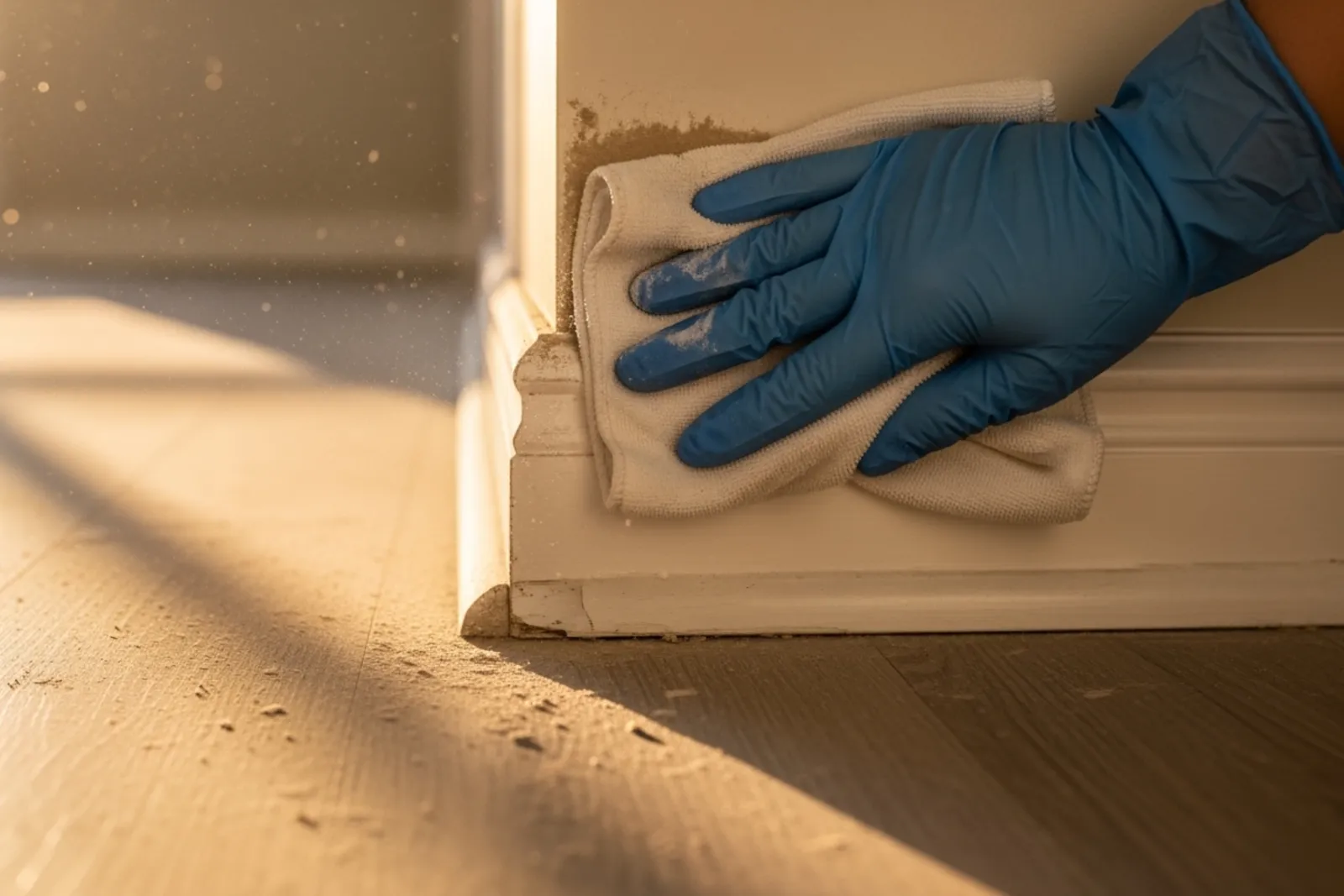
Baseboards deserve their own sentence because renters forget them constantly. Calgary furnace dust settles there fast, and landlords know it. Wipe them, then check them from an angle.
Appliances, laundry, and utility areas
If the unit has in-suite laundry, clean lint from the dryer trap and wipe the washer gasket and detergent tray. Leave the washer door slightly open if you finish right before key handover so it does not trap moisture.
Furnace rooms, storage rooms, and utility closets are easy to ignore because they are not living spaces. Inspectors do not ignore them. Vacuum floor edges, remove cobwebs, and wipe dust from accessible surfaces.
Calgary-specific trouble spots people miss
Every city has its own version of move-out dirt. Calgary’s is dust, and it gets everywhere.
Vents are a big one. So are cold-air returns, door frames, and the tops of baseboards. Window tracks can go from “fine” to “why did I never notice this” once direct sunlight hits them. In older buildings, radiator covers or older vent grilles trap a surprising amount of debris.
Condo renters have a separate set of headaches. Elevator booking times can compress your cleaning window. Parkade dust can get tracked in during the last few trips. If you are moving out of a downtown tower, plan for the unit to need one final sweep and mop after the movers leave, not before.
Pet owners should check walls around food stations, fur around baseboards, balcony doors, and lingering odor in carpets or rugs. If smell is an issue, regular surface cleaning will not fix it. That may require carpet care or treatment targeted to pet odor.
DIY or hire a cleaning service?
There is no moral victory in doing this yourself if it wrecks your move-out week. Sometimes DIY makes sense. Sometimes it really does not.
If the unit is small, you kept up with recurring home cleaning, and the move-out inspection standard is modest, you may be fine on your own. A studio or tidy one-bedroom is manageable if you leave enough time. If the place is larger, has carpet, heavy bathroom scale, cooking grease, pet hair, or post-renovation dust, it becomes a much bigger job.
That is where residential cleaning companies that specialize in deep cleaning and move-in move-out cleaning can help. It is a different skill set than routine home cleaning or office cleaning. The question is not just whether they clean, it is whether they clean to inspection standards.
In Calgary, guide pricing commonly starts around C$185 for a studio, C$225 for a one-bedroom, C$325 for a two-bedroom, and about C$399 for a three-bedroom. Those are examples, not fixed rules. Post-renovation cleanup, heavy grime, neglected appliances, and carpet treatment often cost more.
If you ask for quotes, ask whether the price is flat-rate or time-based. Flat-rate quotes are easier for budgeting, but only if the scope is clear. “Deep cleaning” means different things to different companies, which is a polite way of saying it can get vague fast.
What to ask before booking a move-out cleaner
A decent quote should be built around your unit size, condition, and move-out date. It should also spell out what is included.
Ask whether the checklist covers inside cupboards and drawers, baseboards, interior windows, appliance interiors, bathroom descaling, vent dust, and carpet care if needed. Ask whether the crew brings all supplies and equipment. If you have sensitivities, pets, or a building with product restrictions, ask about low-tox cleaning, plant-based cleaning, or pet-safe cleaning products.
A few other questions matter more than people think. Will they provide a receipt? Is there a written re-clean guarantee if the inspection fails for cleaning-related issues? How soon can they return? Some companies offer fast re-cleans, but you want that in writing before you book.
If you are leaving a luxury condo or a house with custom finishes, ask whether they have experience with luxury home cleaning, natural stone cleaning, and millwork care. Fancy finishes are unforgiving, and the wrong product can leave etching, haze, or water damage.
A simple 48-hour plan that lowers your stress
If you want the clean to go smoothly, the timing matters almost as much as the scrubbing.
Two days before move-out, finish packing everything except your cleaning supplies and overnight items. A proper clean is much easier in an empty unit.
One day before, deal with repairs you are responsible for, defrost the freezer if needed, and book elevator access if you are in a condo.
On moving day, wait until movers are fully done. Cleaning before the final box leaves is usually wasted effort.
Clean top to bottom, dry rooms before wet rooms, and save floors for last. If you hired a service, be available by phone in case access issues come up.
Right after cleaning, take clear photos and short videos of every room, inside appliances, and problem-prone areas like window tracks and bathrooms.
It sounds a little fussy. It also prevents half the arguments that happen later.
The final walkthrough before you hand over the keys
Do one last pass when the unit is empty and quiet. Open the fridge, oven, dishwasher, closets, and bathroom vanity. Stand in the doorway and look along the baseboards. Turn on the bathroom light and check the mirror and glass again. Smell the place. Seriously. Scent is part of cleanliness whether we like it or not.
Make sure you remove all garbage, food, hangers, shower items, spare toiletries, and balcony debris. Return keys, fobs, parking remotes, and mail keys as instructed. Keep copies of your move-in inspection, move-out photos, and cleaning receipt together in one folder.
If there is a disagreement later, your paperwork matters more than your memory.
The bottom line
Move-out cleaning in Calgary is really about two things, condition and proof. You want the unit cleaned to the standard a landlord will inspect, and you want documentation that shows you took the handover seriously.
The big misses are predictable. Kitchens that look clean but still have grease. Bathrooms with scale in the corners. Dust on vents, frames, and baseboards. Window tracks nobody checked. These are boring details. They are also the details that cost people money.
Whether you clean yourself or hire help, think like an inspector. Empty everything. Clean the edges. Take photos. Keep the receipt. That approach gives you the best shot at getting your deposit back without a long email chain afterward.