
Calgary Winter Salt and the Case for a Whole-Home Reset
Learn how Calgary winter salt, sand and slush build up indoors and why a whole-home reset helps restore a truly clean home. Read more.
September 7, 2026
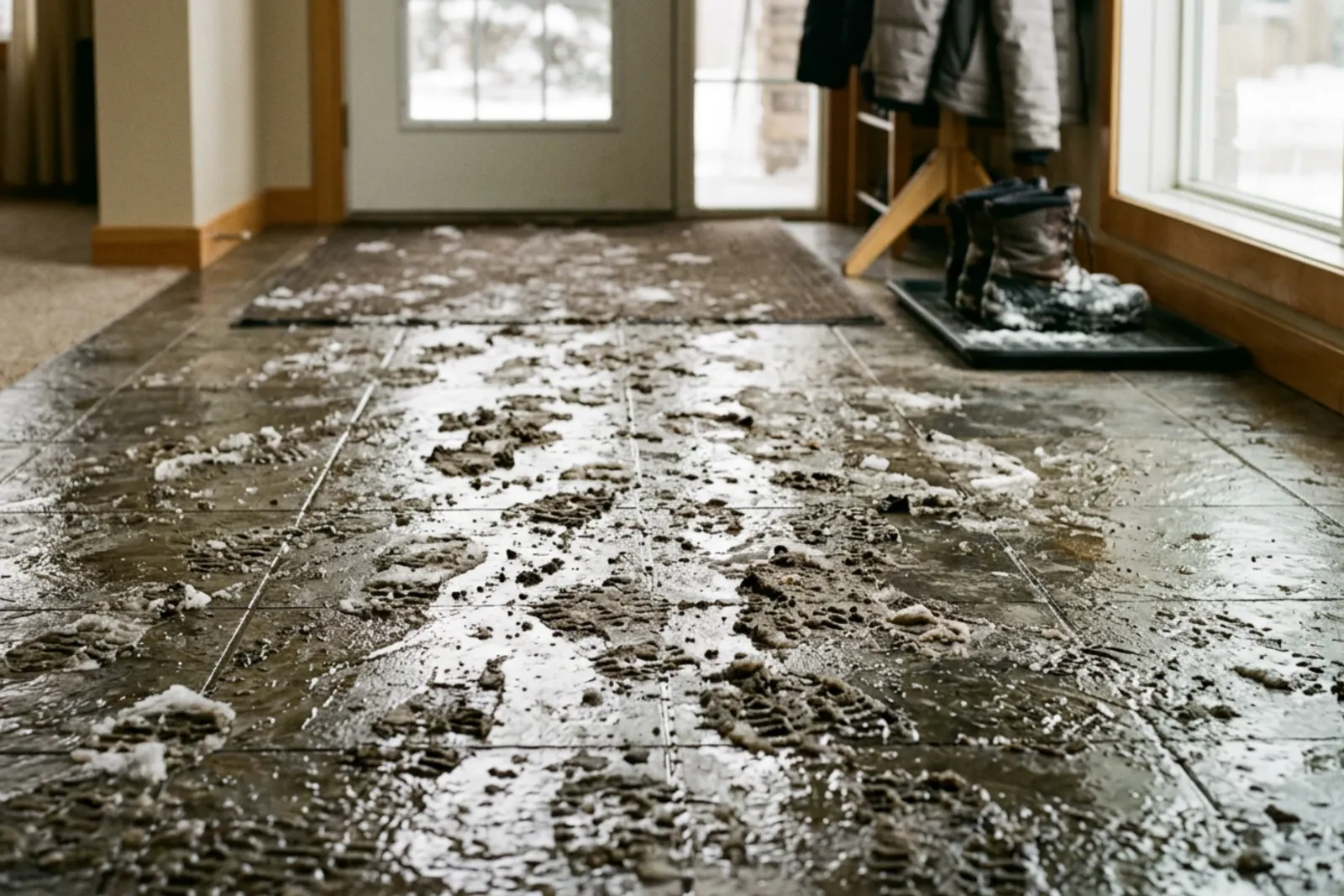
A Calgary winter leaves evidence behind. It collects in the entryway, crunches faintly under shoes, settles into rug fibres, and somehow appears along the baseboards two rooms away.
Road salt, sand, gravel, slush, and general dust are part of life during snow season. They help make roads safer, but they also come indoors through boots, pet paws, stroller wheels, delivery carts, mobility equipment, and the constant back-and-forth of daily routines. A quick mop may make the front hall look better for a day, yet winter buildup often spreads far beyond the one visible patch near the door.
That is why many households reach a point when ordinary weekly cleaning no longer feels like enough. A whole-home seasonal reset can clear out the residue that has slowly accumulated across floors, textiles, edges, and overlooked corners, restoring a home that feels properly clean rather than temporarily tidied.
Why Calgary homes collect so much winter residue
Calgary uses several materials to manage snow and ice on roads. Depending on road-surface temperatures and the forecast, winter operations may involve rock salt, liquid salt brines, sanding chips, gravel mixtures, and liquid calcium chloride.
When road temperatures sit roughly between 0°C and minus 14°C, rock salt and brine solutions can help prevent ice formation or improve traction. In much colder conditions, particularly below minus 15°C, road crews may use a mixture made up mostly of gravel with a small amount of salt, alongside liquid calcium chloride.
These choices are practical. Salt does not perform the same way in very cold weather, while sand and gravel give tires needed grip. Still, every material applied outdoors has a chance of ending up inside.
Calgary applies an estimated 40,000 to 50,000 tonnes of road salt each year. The city collects leftover material through spring street cleaning, but winter is long, and there is plenty of time for fine grit and residue to make repeated trips through homes, apartment buildings, offices, and shared entrances.
The result is not always dramatic. Sometimes it is simply a dull floor that never seems to look freshly washed. Sometimes it is a gritty feeling underfoot. Sometimes it is a white haze around an entryway tile floor that returns after every thaw.
How salt, grit, and moisture travel through a house
Most winter mess enters through a small number of places:
Main entrances, side doors, mudrooms, and garage-to-home doors
Shared condo lobbies, hallways, elevators, and vestibules
Laundry-room entrances and patio doors
Footwear, pet paws, coats, bags, strollers, and mobility aids
The entryway takes the worst of it, but that does not mean the problem stays there. Fine particles stick to shoe treads, then move into hallways and living rooms. Damp footwear creates little pools of melting snow, carrying dissolved salt and grit into flooring seams. Pets may shake off slush after a walk, leaving residue close to walls and furniture.
A person can walk through the house several times without noticing they are moving a thin layer of winter debris along with them. By the end of a busy week, that material may be in the kitchen, on the stairs, beneath a dining table, and caught in a rug near the sofa.
Condo residents often deal with an extra layer of transfer. Shared corridors can collect material from dozens of pairs of boots. Even when a building is well maintained, occupants may bring that grit into their units from the elevator or hallway. Commercial cleaning teams see a similar pattern in offices, reception areas, and washrooms during the snowiest weeks.
What winter buildup looks like indoors
Winter grime is rarely one thing. It is a mixture, which is why it can be stubborn.
Salt residue may leave white streaks or a cloudy film on hard floors. Gravel and sanding particles gather in corners, thresholds, and floor transitions. Melted snow becomes muddy water once it mixes with dust. Mats hold moisture beneath their surface, where it is easy to miss until an odour develops or the flooring below starts looking dull.
Carpet and rugs can be especially deceptive. Their surface may look fine after vacuuming, while fine grit remains deep in the pile. Each footstep pushes those particles farther down. Textured tile, grout lines, unfinished-looking edges of flooring, and low-pile area rugs also tend to hang onto winter debris.
There is another part of the mess that people often do not connect to snow season: lower-level dust. As footwear carries grit indoors, movement stirs up ordinary dust too. It settles on lower trim, furniture legs, stair edges, vents, door frames, and ledges. A home may feel dusty more quickly in winter because it is getting a steady supply of particles from outside.
Why salt and grit deserve more than a quick wipe
Road salt itself is not a household emergency, and panic cleaning is unnecessary. Health Canada’s 2001 assessment concluded that road salts were not harmful to people within the scope of that assessment. Their environmental effects are a different matter. Environment Canada found in 2001 that road salts can enter ecosystems in amounts that may harm plants, wildlife, fish, aquatic environments, and groundwater. Federal guidance on better road-salt management followed in 2004.
For homeowners and tenants, the immediate concern is usually practical: salt, moisture, and abrasives can make surfaces look worn, dirty, or neglected.
Fine gravel can act like sandpaper under shoes. Over time, repeated traffic may contribute to visible wear on some hard-floor finishes. Moisture can make dirt cling to floors and textiles. Salt residue can leave streaks that seem to reappear after an imperfect rinse. None of this means every floor needs harsh chemicals or aggressive scrubbing. In fact, too much product can leave another residue behind.
The better approach is controlled cleaning that suits the material. A natural stone floor needs different care than ceramic tile. Hardwood, laminate, vinyl, grout, rugs, and carpet all have their own limits around water, cleaning solutions, and abrasion. Low-tox cleaning products can work well for ordinary winter buildup when they are appropriate for the surface and used in the right amount.
When routine cleaning has stopped being enough
Routine home cleaning is useful for staying ahead of daily mess. Vacuuming high-traffic areas, drying wet spots, shaking out mats, and mopping the entryway can prevent a lot of buildup. But winter has a way of outlasting good intentions.
A deeper reset is worth considering when any of these signs show up:
Floors still feel gritty after vacuuming or mopping.
White salt marks, dull patches, or muddy streaks return quickly.
Mats remain damp, flattened, or packed with debris.
Baseboards, thresholds, and corners have visible dust or grit.
Rugs and carpets look tired despite regular vacuuming.
The home has had heavy traffic from children, pets, guests, or frequent deliveries.
Most cleaning has focused on the kitchen, bathrooms, and visible central areas.
The last point matters. Many people clean the spaces they see most often, which is completely understandable. Yet winter material settles where attention is least likely to go: under beds, behind doors, below furniture, along stair corners, and beside cabinet toe-kicks.
A seasonal deep cleaning is less about perfection than getting those neglected areas back under control.
A practical whole-home winter reset
A proper winter reset starts with dry debris. Trying to mop gravel, sand, or compacted dirt before removing it usually creates muddy residue and makes the job more frustrating.
Start at the entryway
Remove mats and inspect the floor beneath them. Vacuum or sweep loose gravel, sand, hair, and debris first. Pay close attention to door thresholds, corners, baseboards, door edges, and the narrow strip of flooring that sits just inside the entrance.
Washable mats should be cleaned according to their care label and dried fully before they go back down. For heavier mats, thorough vacuuming and appropriate extraction can make a noticeable difference. Do not forget the underside. Damp debris trapped underneath a mat can leave a floor looking worse than expected.
If possible, use two layers of protection: one mat outside the door and one inside. This will not eliminate salt transfer, but it catches a surprising amount.
Work through traffic paths before open areas
After the entryway, follow the routes people take through the home. Hallways, stair treads, the path to the kitchen, and the route between the garage and living area usually need more attention than untouched corners of a spare room.
Vacuum edges carefully with a crevice tool. Grit likes to collect where the floor meets the wall and where two floor types meet. On hard floors, use a method suitable for the finish, with minimal excess water where moisture-sensitive materials are involved.
For carpets and area rugs, vacuum slowly enough to lift fine particles. A rushed pass can pick up surface fluff while leaving heavier grit behind. If a rug has absorbed repeated wet-boot traffic, it may need more than vacuuming. Follow the manufacturer’s guidance or use a professional cleaning method appropriate for its fibres and backing.
Clean the overlooked lower surfaces
Winter deep cleaning has a very literal low-level focus. Baseboards, lower walls, stair risers, furniture legs, cabinet toe-kicks, and door frames all catch dust and splatter.
A slightly damp microfiber cloth is often enough for painted trim and many sealed surfaces. Use a gentle cleaner only where needed, and avoid soaking wood or unsealed materials. If you have natural stone, specialty tile, decorative millwork, or delicate finishes, check the care guidance before choosing a product. Strong acidic cleaners can damage certain surfaces, especially some types of stone and grout.
This part is tedious. There is no glamorous way to say it. But it changes how a room feels. Clean floors look better when the edges around them are clean too.
Give kitchens and bathrooms a winter check
Kitchens and bathrooms may not seem connected to road salt, but winter traffic reaches them quickly. Check floor edges, grout lines, cabinet bases, and the area around exterior-facing doors. In bathrooms, moisture and foot traffic can turn small amounts of grit into a film that clings to tile.
Focus on surfaces that receive frequent contact as well. Light switches, handles, railings, and lower cabinet pulls often get missed during a fast weekly clean. The goal is not to use more product. It is to clean deliberately, then remove any cleaner residue with a suitable final wipe or rinse.
Finish with furniture edges, vents, and ledges
Once floors and traffic paths are addressed, dusting makes more sense. Clean beneath and around furniture where practical. Wipe ledges, lower shelves, vents, and accessible blinds. Vacuum upholstered furniture if pets, wet coats, or winter gear have been resting there.
This is where a home begins to feel reset rather than merely mopped.
Cleaning choices that protect your floors
More cleaning power is not always better. Winter residue often responds well to patient removal, repeated rinsing where needed, and the right tool for the surface.
Avoid using abrasive scrubbers on delicate flooring finishes. Do not flood laminate, wood, or other moisture-sensitive floors. Be cautious with vinegar or acidic products on natural stone, since they can dull or etch certain surfaces. If salt film remains after cleaning, the issue may be leftover cleaner, dirty mop water, or insufficient rinsing rather than a need for stronger chemicals.
For many households, plant-based cleaning products and pet-safe cleaning routines are a sensible fit during winter. Pets and children spend time near the floor, and there is little benefit in using unnecessarily harsh products for ordinary salt and dirt. What matters most is that the product is compatible with the material and that loose grit has already been removed.
Timing your reset during Calgary winter
There is no single best date for a deep cleaning. Some homes need attention after a cluster of snow events. Others benefit most near the end of winter, when the entryway has endured months of wet boots and repeated salt exposure.
A reset can also make sense before hosting guests, after a busy school-break period, when a household has been dealing with pets and slush, or when spring light starts making every dusty edge painfully obvious.
High-traffic homes may need a lighter version of this process more than once during the season. Recurring home cleaning can help control everyday buildup, while a more thorough deep cleaning handles the accumulated material that routine visits may not fully reach.
For offices, rental properties, and multi-unit buildings, waiting until spring can be a mistake. Entry areas, elevators, corridors, reception spaces, and washrooms benefit from consistent attention during snow season, before grit becomes embedded in flooring and mats.
The goal is a clean home, not a spotless illusion
Winter in Calgary comes with salt, sand, moisture, and mess. That is the trade-off for safer roads and walkways. A good cleaning routine cannot stop those materials at the city limits, but it can stop them from taking over the house.
The most useful approach is simple: contain debris at the door, remove dry grit before washing, clean traffic paths thoroughly, and schedule a whole-home reset when the mess has spread beyond the entryway.
When regular cleaning no longer restores the feeling of a clean space, it is time to look past the obvious patch of floor. The real winter cleanup happens in the corners, under the mats, along the baseboards, and everywhere the season has quietly travelled.