
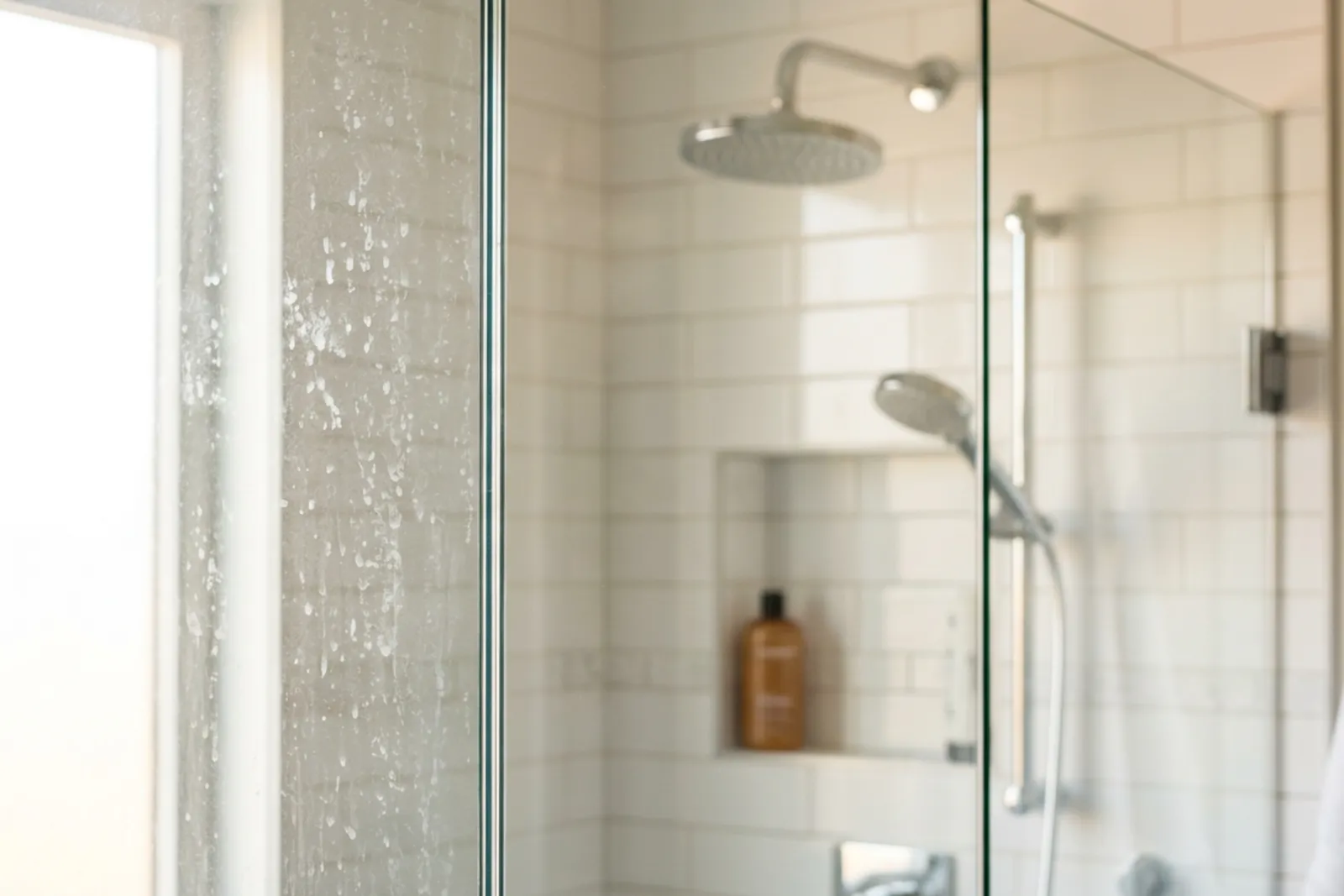
How to Clean Hard Water Buildup in Calgary Showers, Glass, and Fixtures
Learn how to remove hard water buildup from Calgary shower glass, fixtures, and tile safely. Restore shine with these cleaning tips today.
September 10, 2026
If you live in Calgary, white marks on shower glass and chalky rings around faucets are probably familiar. You clean the bathroom, it looks great, and then a few days later the spots creep back. It can feel like you are losing an argument with your own shower.
The culprit is usually hard water.
Calgary’s drinking water contains naturally occurring calcium and magnesium. These minerals are harmless to drink, but when water droplets evaporate on glass, tile, or metal, the minerals stay behind. Over time, they form the cloudy film, crusty residue, and dull spotting that make a clean bathroom look less clean than it really is.
The good news is that most hard water buildup responds well to patient, surface-safe cleaning. The trick is choosing the right product, letting it work long enough, and resisting the urge to scrub aggressively.
Why Calgary Water Leaves White Mineral Deposits
Calgary draws its water from the Bow and Elbow River systems. As water moves through the region, it picks up minerals from natural geological deposits, including limestone. Calcium and magnesium are the main minerals associated with water hardness.
Hard water is not a water-quality failure. In Calgary, these minerals have no known health effects at the levels found in the drinking water supply. Still, they do affect day-to-day cleaning. Hard water can make soap harder to rinse away, reduce lather, and leave deposits anywhere water regularly dries.
Those deposits tend to appear on:
Shower doors and glass panels
Chrome faucets and stainless-steel fixtures
Showerheads and faucet aerators
Tile ledges, corners, and grout lines
Bathtub edges and drain surrounds
Calgary’s water hardness also changes throughout the year and across the city. Hardness is often lower during spring snowmelt and higher during the coldest months, generally from December through February.
Northern Calgary is commonly supplied through the Bearspaw Water Treatment Plant, which uses Bow River water. Southern areas generally receive water through the Glenmore Water Treatment Plant, which draws primarily from the Elbow River. The Elbow supply is often harder.
In 2025, reported hardness levels ranged from 141 to 274 milligrams per litre expressed as calcium carbonate, or mg/L CaCO3. Bearspaw water ranged roughly from 141 to 200 mg/L during the year, while Glenmore water ranged from about 181 to 274 mg/L. That difference may explain why one household finds shower maintenance easy while another feels like the glass clouds up overnight.
Is It Mineral Scale, Soap Scum, or Permanent Damage?
Before reaching for a cleaner, take a close look at the surface. Mineral buildup, soap scum, and etched glass can look similar at first glance, but they need different approaches.
Mineral scale is usually white, grey, off-white, or chalky. It may feel rough when you run a fingernail across it. On faucets, it often gathers at the base, around seams, and near the aerator. On showerheads, it may block spray holes.
Soap scum is often waxier or slightly greasy. It can look cloudy, yellowish, or grey, especially where body wash and shampoo residue mix with minerals. Most shower glass has some combination of both soap scum and hard water scale.
Etching is different. It occurs when the surface itself has been damaged. On glass, it can look like permanent cloudy patches that remain after thorough cleaning. On natural stone, acidic products can cause dull, pale spots that look like stains but are actually changes to the stone’s finish.
A simple check can help: apply a compatible cleaner to a small area of suspected scale and let it sit briefly. If the mark softens or begins to lift with gentle wiping, it is likely removable buildup. If nothing changes after careful cleaning, you may be dealing with etching or a worn surface rather than leftover mineral residue.
Gather Supplies Before You Start
Hard water cleaning goes more smoothly when everything is nearby. You do not need an elaborate kit, but a few basic tools make a noticeable difference:
Microfiber cloths for wiping and drying
A non-scratch sponge or soft brush
A soft toothbrush for small crevices and showerhead holes
A spray bottle or small bowl for cleaning solution
Gloves, especially when using commercial descalers
A shower squeegee for glass
Good ventilation if using acidic or stronger products
Avoid steel wool, abrasive powders, razor blades, and rough scouring pads. They might remove some buildup, but they can also scratch glass, dull chrome, damage coatings, and leave surfaces more likely to hold residue later.
Always test a product in a small, hidden area first. This matters with specialty metal finishes, dark grout, coated shower glass, natural stone, and older fixtures where the finish may already be worn.
One safety rule deserves to be repeated: never mix vinegar, citric acid, or a commercial descaler with bleach, ammonia, or another cleaning product. Mixing cleaners can create dangerous fumes or unpredictable chemical reactions. Rinse the surface fully between products.
Cleaning Hard Water Marks From Shower Glass
Shower glass is where mineral buildup becomes most obvious. A clear door can turn hazy over time, even in an otherwise tidy bathroom. Light buildup is usually manageable with a mild acidic cleaner and a little consistency.
Start With a Warm Rinse
Rinse the glass with warm water first. This removes loose hair, body wash residue, and dust that could drag across the surface while you wipe. Use a microfiber cloth to clear away any visible debris.
Warm water also helps soften some soap residue before you apply your main cleaner.
Use a Mild Acidic Cleaner for Light Scale
Calcium-based deposits respond to mild acids. Diluted white vinegar is a common choice for acid-resistant surfaces, and citric acid is another practical option with a less lingering smell.
For a vinegar solution, mix equal parts white vinegar and warm water in a spray bottle. For citric acid, follow the product instructions for a cleaning dilution. Citric acid powders vary in concentration, so there is no single mix that suits every product.
Spray the solution directly onto the glass, aiming for even coverage. Avoid soaking nearby stone, metal trim, or painted surfaces. The goal is to keep the mineral film wet long enough to soften, usually several minutes.
Do not spray, wait ten seconds, and start scrubbing. That is how people end up pressing harder than necessary. Let the cleaner do its job first.
Wipe in Small Sections
Use a microfiber cloth or non-scratch sponge and work in manageable sections. Apply light pressure in overlapping circular or side-to-side motions. If the scale is stubborn, apply more solution and wait again rather than switching immediately to a harsher pad.
Heavy buildup may need two or three rounds. It is tedious, admittedly, but gentle repetition is safer than one aggressive session that scratches the glass.
Rinse and Dry Completely
Rinse the shower glass thoroughly with clean water. Any acidic residue left behind can affect nearby finishes or leave streaks. Dry the glass with a clean, lint-free microfiber cloth, then run a squeegee over it.
Drying is more than a finishing touch. It removes the droplets that would otherwise evaporate and leave a fresh layer of minerals behind.
When Glass Stays Cloudy
If the shower door remains dull after careful cleaning, assess whether the problem is actual buildup. Old glass can develop etching, especially if hard water has dried on it for years. Etched glass cannot be restored with vinegar alone. Glass restoration may be possible, but results vary, and severe damage can require professional assessment or replacement.
Cleaning Faucets, Showerheads, and Metal Fixtures
Mineral deposits love tight spaces. You may see a thin white ring at the faucet base, crust around the showerhead, or buildup in the screen at the end of a tap.
The same basic principle applies: soften the scale, agitate gently, rinse well, and dry.
Start by rinsing the fixture with warm water to remove grit. Apply a diluted vinegar or citric-acid solution to a cloth rather than flooding the fixture. This gives you better control, particularly around joints and caulking.
Wrap the damp cloth around the affected area for several minutes. For a faucet base, press the cloth gently along the seam. For a removable showerhead or aerator, follow the fixture manufacturer’s guidance before taking it apart. Some components are easy to remove; others are not worth forcing.
Use a soft toothbrush around aerators, showerhead nozzles, seams, and handles. Do not use pins, knives, or sharp metal tools to dig out deposits. They can damage rubber nozzles, scratch finishes, or harm internal parts.
Rinse every treated area thoroughly, then dry and buff with a microfiber cloth. Chrome shows water spots quickly, but it also responds beautifully to a gentle final buff.
Be careful with matte black, brushed nickel, brass, plated finishes, and fixtures with protective coatings. Vinegar may be tolerated for brief contact on some products, but it is not universally safe. Manufacturer care instructions should win whenever they conflict with a general cleaning tip.
Cleaning Tile and Grout Without Causing Damage
Tile cleaning depends heavily on what the tile is made of. Ceramic and porcelain usually tolerate mild acidic cleaning better than natural stone. Marble, limestone, travertine, and other calcareous stones do not.
That distinction is worth taking seriously. Calgary’s mineral scale may come from limestone, but using vinegar on a limestone tile is a bad trade. The acid can etch the surface, leaving a dull mark that looks worse than the original deposit.
Ceramic and Porcelain Tile
For ceramic or porcelain shower tile, begin by removing loose dirt and soap residue with warm water. Apply a diluted vinegar or citric-acid solution carefully to areas with visible scale, particularly ledges, corners, and water lines.
Keep the contact time modest, especially around grout. Acidic cleaning products can weaken or discolour certain grout types if used repeatedly or left sitting too long.
Scrub with a soft brush or non-scratch sponge, then rinse very thoroughly. Dry the tile and ledges afterward so dissolved minerals do not settle back as the water dries.
Natural Stone Tile
For marble, limestone, travertine, and other natural stone, skip vinegar, citric acid, and typical bathroom descalers unless the product specifically says it is safe for that stone.
Use a pH-neutral, stone-safe cleaner instead. It may work more slowly on mineral buildup, but it protects the stone from etching. In some cases, stubborn deposits on natural stone are better handled by a stone-care professional. This is especially true with expensive tile, polished surfaces, or unknown sealers.
Grout deserves a similarly careful approach. A soft brush and appropriate cleaner are safer than harsh scrubbing. It is surprisingly easy to wear away grout’s surface and create grooves where water and soap residue collect even faster.
Vinegar, Citric Acid, or Commercial Descaler?
There is no single best cleaner for every shower. The right choice depends on the amount of buildup and the surface you are cleaning.
Vinegar is affordable and widely available. It works well for light mineral film on compatible glass, ceramic, porcelain, and certain metal finishes. Its downside is the smell, and thicker scale often needs repeated treatment.
Citric acid is another low-tox option. It dissolves calcium deposits effectively, can be mixed to a controlled strength, and tends to leave less of a lingering odour. It is still acidic, though, so the same precautions apply. Test it, rinse it, and keep it away from acid-sensitive materials.
Commercial descalers are useful when buildup is thick, layered, or constantly returning. They are formulated to work faster than mild household acids, but stronger products demand more caution. Read the label closely for surface compatibility, dilution, contact time, ventilation, gloves, and rinsing requirements.
More powerful does not automatically mean better. A product strong enough to dissolve stubborn scale may also damage natural stone, metal finishes, grout, seals, caulking, or glass coatings if used carelessly.
Stop Buildup Before It Becomes a Weekend Project
Hard water deposits are much easier to prevent than remove. The most effective habit is also the least glamorous: use a shower squeegee after each shower.
It takes less than a minute to pull water off the glass and tile. That small routine reduces the number of mineral-rich droplets left to dry on the surface. Wiping faucets, handles, and the fixture base with a microfiber cloth helps too.
Keep the bathroom fan running during and after showers to reduce moisture. Check showerhead openings, faucet aerators, corners, and ledges during your regular bathroom cleaning. These are the spots where scale quietly builds until it becomes difficult to ignore.
Homes supplied by harder water, including many areas served by the Glenmore system, may need more frequent maintenance. That is normal. A weekly wipe of high-contact surfaces is far easier than trying to remove months of crusted deposits in one go.
When Routine Cleaning Is Not Enough
Sometimes the bathroom needs more than vinegar and determination. Consider professional help if scale is thick across several surfaces, returns unusually quickly, or appears on delicate materials.
Persistent cloudiness on shower glass may be etched rather than dirty. Natural stone needs specialized care. Expensive fixtures with unusual finishes can be risky to experiment on. And if you have tried careful cleaning without improvement, there is no prize for escalating to harsher products until something gets damaged.
Calgary’s hard water is a fact of life, not a sign that your home is unclean or that the water is unsafe. With compatible products, gentle tools, complete rinsing, and regular drying, you can keep the mineral film under control. The goal is not to win a dramatic battle once a year. It is to make buildup too minor to become one.