
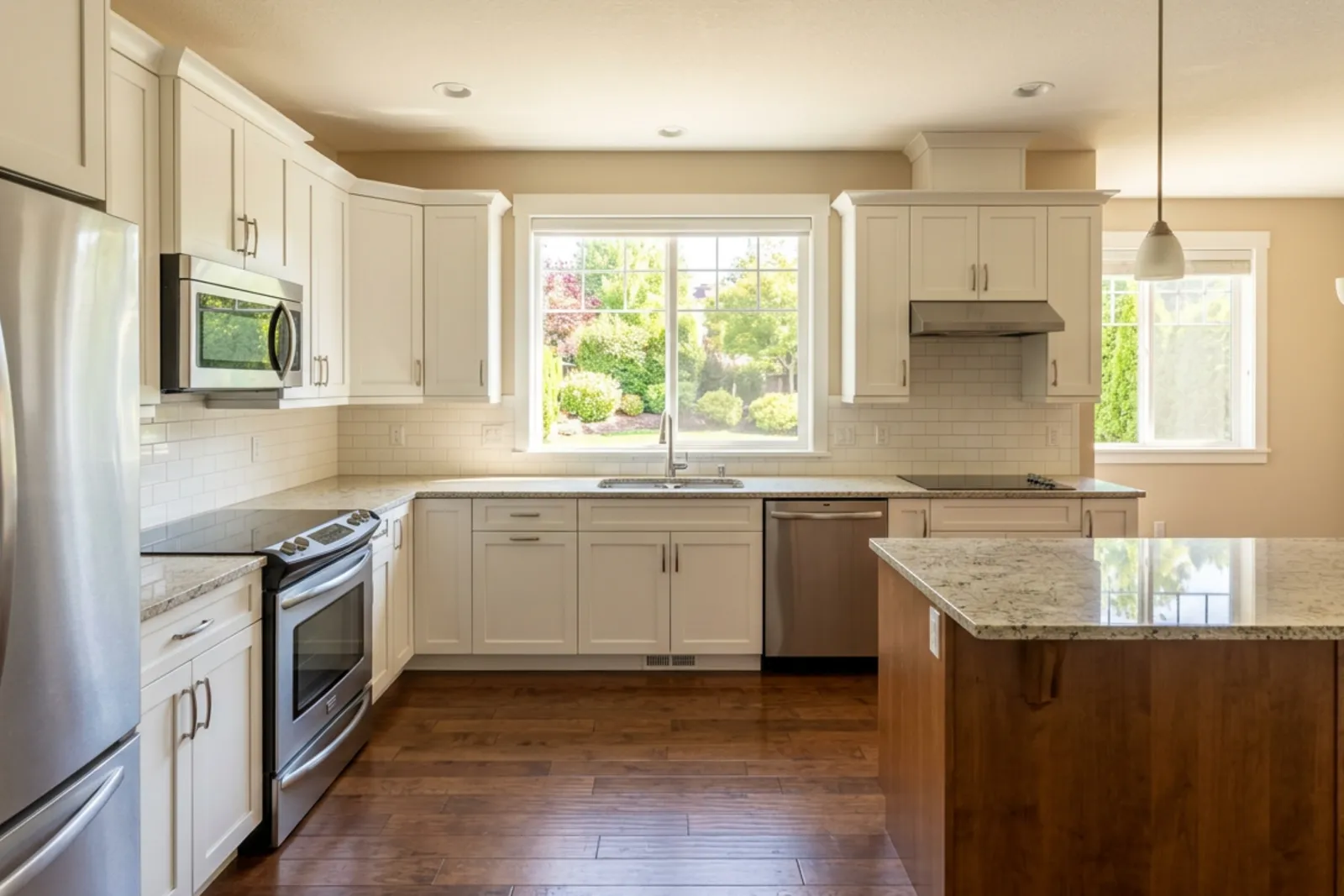
What a Family-Home Move-Out Clean Really Involves: A Legacy, Calgary Case Study
Learn what a family-home move-out clean involves in Legacy, Calgary, from labor estimates to handoff prep. Plan your move-out cleaning today.
September 15, 2026
Moving out of a home has a way of making every overlooked spot suddenly visible. Once furniture is gone, there is nowhere for dust along baseboards, scuffs near door frames, crumbs in drawers, or pet hair tucked into carpet edges to hide.
That is why move-in move-out cleaning for a suburban family home is usually a different job than cleaning a small apartment or condo. A three-bedroom, two-bathroom home in Legacy, Southeast Calgary, gives us a useful example. It is a familiar type of property for families, renters, landlords, and homeowners preparing for a sale: more rooms, more floor space, and often more than one level to inspect.
This case study does not claim specific before-and-after results for one individual property. Detailed project documentation would be needed to confirm those facts. Instead, it uses the Legacy home scenario to explain what typically goes into a thorough move-out clean, how labour is estimated, and how to prepare for a smoother handoff.
Why a Family Home Requires a Different Cleaning Plan
A move-out clean is more than a faster version of routine home cleaning. Routine visits tend to focus on keeping lived-in spaces presentable. The goal is maintenance. Move-out cleaning has a different standard: the home is empty, every surface is visible, and the property needs to feel ready for the next person.
In a three-bedroom, two-bathroom family home, the work often extends well beyond the obvious rooms. There may be an entryway that collects road grit and winter residue, hallways with fingerprints near light switches, stairs with worn carpet edges, closets, a laundry area, storage rooms, or a finished basement. Even a home with a fairly simple layout can have a surprising number of details once it is vacant.
A compact condo may have one bathroom, limited storage, and a single continuous floor. A family home often has separate zones that need their own approach. The kitchen may need intensive work while bedrooms need a surface-by-surface inspection. Upstairs bathrooms can require detailed fixture cleaning, while the main floor may have the heaviest traffic soil. The issue is not simply square footage. It is the total number of surfaces, transitions, and hidden edges.
That distinction matters when requesting a Calgary cleaning service. A quote based only on bedroom and bathroom count may miss important details, such as a second living room, interior stairs, built-in shelving, a mudroom, or pet-related cleaning needs.
The Areas That Get More Attention During a Move-Out Clean
Empty rooms make it easier to see what everyday life leaves behind. Furniture no longer covers flooring. Open cupboards reveal crumbs and spills. Light hits glass, tile, trim, and appliances differently when the room is bare.
A practical move-out cleaning checklist often concentrates on the following areas:
Kitchens, including cabinet exteriors and interiors when requested, counters, sinks, backsplashes, appliance surfaces, and floor edges
Bathrooms, including tubs, showers, toilets, sinks, mirrors, tile, fixtures, and the floor around the toilet base
Bedrooms, living rooms, and hallways, with attention to floors, closet shelves, doors, trim, vents, and visible corners
High-contact and high-traffic areas such as stair rails, entry doors, light switches, baseboards, and interior doors
Vacant storage areas, laundry rooms, and any rooms that had been difficult to reach while furnished
The kitchen and bathrooms usually take the most time. They are where residue builds up in layers, even in homes that are generally well cared for. Grease can settle on cabinet fronts near the range. Water spots can cling to shower glass. Food debris finds its way into refrigerator drawers and oven crevices. None of this is dramatic, but it is tedious work, and it is exactly the kind of work that changes how clean a home feels to someone walking through it for the first time.
Floors deserve more attention than many people expect. A vacuumed carpet may still hold pet hair along the perimeter. Hard flooring can look fine until furniture is removed and the edges are exposed. If carpet cleaning or extraction is needed, it should be discussed separately because it can affect both timing and price.
The Legacy Home Scenario: What Would Shape the Scope?
For a three-bedroom, two-bathroom home in Legacy, the home’s actual size and condition would determine the final cleaning plan. Two houses with the same number of bedrooms can require very different amounts of labour.
One might be a compact, well-maintained property with mostly hard floors and an uncomplicated layout. Another may have stairs, carpet on several levels, a large kitchen, pets, children, a finished basement, and appliances that need interior cleaning. Those are not small differences.
Here are the questions that usually help define the scope:
How Large Is the Home?
Square footage gives a starting point. A home closer to 1,200 square feet has fewer surfaces to cover than one closer to 2,500 square feet, even if both have three bedrooms.
For larger homes, cleaners also need to account for travel between floors and rooms. Stairs themselves take time to vacuum, wipe, and inspect. Long hallways add baseboards, doors, light switches, and flooring. A basement can add an entire second living area.
What Is the Home’s Current Condition?
Condition can outweigh size. A small home with heavy kitchen buildup may take longer than a larger home that has been cleaned regularly.
Common factors that add labour include accumulated dust, grease around cooking areas, hard-water buildup in bathrooms, pet hair, food residue inside appliances, and marks on doors or trim. A home does not need to be neglected for these issues to appear. They are a normal result of living in a space over months or years.
Which Extras Are Needed?
Some tasks fall outside a standard move-out scope or require specific approval. These may include cleaning inside an oven, refrigerator, or cabinets; carpet extraction; interior window cleaning; wall washing; garage cleaning; or post-renovation cleanup.
It helps to decide early which extras are essential. If a landlord requires appliance interiors to be cleaned, that should be part of the quote. If the home is being listed for sale and the priority is presentation, window glass and detailed trim work may be worth including.
Understanding Labour Hours and Team Size
Cleaning estimates are often expressed in total labour hours. This can be confusing at first because total labour hours are not the same as the number of hours the cleaners are physically at the house.
For example, six labour hours might mean:
Two cleaners working for three hours each
Three cleaners working for two hours each
The amount of work is the same. The larger team simply completes it in less elapsed time.
For a family home, a small crew can divide the work efficiently. One cleaner may focus on bathrooms, another on the kitchen, and another on floors, bedrooms, or detailed trim. The value of a team is not that cleaning becomes magically easier. It is that the work can happen simultaneously without skipping the awkward in-between spaces that often get missed.
Typical estimates for a three-bedroom, three-bathroom home between roughly 1,200 and 1,800 square feet place a general clean at about five to seven labour hours. A deeper move-out clean may require about eight to 10 labour hours. Larger homes need more time. A property around 2,000 to 2,500 square feet may require approximately 10 to 13 labour hours for a move-out clean, while homes in the 2,500 to 3,500 square foot range may require 15 to 20 labour hours.
These are planning ranges, not guarantees. The three-bedroom, two-bathroom Legacy example may take less or more time depending on its layout, upkeep, and requested services.
Pricing: Why Square Footage Is Only Part of the Picture
Move-out cleaning pricing is usually based on expected labour, crew size, and the selected scope. The source pricing framework for a home around 1,200 to 1,800 square feet lists a move-out or deep cleaning range of approximately $320 to $400 at a promotional rate, or $400 to $500 at a regular rate.
For homes around 2,000 to 2,500 square feet, the listed range is about $400 to $520 promotional and $500 to $650 regular. For homes between 2,500 and 3,500 square feet, estimated move-out pricing ranges from $600 to $800 promotional and $750 to $1,000 regular.
Those figures are useful as broad reference points, but nobody should treat them as a universal flat-rate quote. Pricing changes when a property has heavy buildup, unusual access requirements, interior appliance cleaning, carpet extraction, or other add-ons.
The fairest approach is straightforward: provide accurate details before booking. Mention the approximate square footage, number of levels, rooms, pets, appliance interiors, and deadline. A good estimate should reflect the work that is actually needed, not an overly optimistic version of it.
Setting Priorities When Time Is Limited
Sometimes the move-out timeline is tight. Perhaps possession is scheduled for the next morning, movers ran late, or a lease ends sooner than expected. In those cases, a maximum-hour cap can be useful.
A time cap works best when priorities are clear. If the crew cannot complete every optional task within the available labour hours, they can focus on the rooms that matter most. For many move-outs, that means the kitchen, bathrooms, floors, and high-visibility surfaces. Interior closets, inside cabinets, or a basement storage room may be secondary if they are relatively clean.
This is not an ideal substitute for allowing enough time. A proper deep cleaning takes the time it takes. Still, a priority-based plan is better than hoping everything can be completed at the same level of detail under an unrealistic deadline.
Be specific. “Please focus on the kitchen and upstairs bathrooms first” is more useful than “Clean as much as possible.” Clear instructions protect everyone from disappointment later.
Before-and-After Photos Can Clarify the Standard
Photo documentation is especially helpful during a property transition. A quick set of before-and-after images can show the difference between a basic tidy-up and a genuine move-out clean.
For a family home, useful photos may include kitchen counters and cabinet faces, appliance interiors if they are part of the job, shower glass, bathroom fixtures, stairways, floor edges, baseboards, empty closets, and rooms after furniture removal.
There is a practical reason for this beyond marketing. Photos can support communication among homeowners, tenants, landlords, property managers, and cleaning teams. They create a record of the visible condition at a particular point in time.
That said, photos have limits. They do not always show dust, odors, texture, or residue clearly. A photo is best used as one part of a clear conversation about the scope and expected finish.
How to Prepare a Home Before the Cleaning Appointment
A move-out clean goes more smoothly when the home is empty or nearly empty. Cleaners can reach flooring, baseboards, and corners without moving heavy furniture or sorting belongings. It also makes the final inspection much more accurate.
Before the appointment, try to:
Remove personal belongings, garbage, and donations from the home.
Empty refrigerators, freezers, cabinets, drawers, and closets if interior cleaning is requested.
Confirm access details, alarm instructions, parking, and key-transfer timing.
Identify fragile surfaces or materials that need special care, such as natural stone, unfinished wood, or custom millwork.
Share a short list of priority areas and any concerns about pet hair, stains, buildup, or recent renovation dust.
If the home has been renovated recently, be candid about it. Post-construction cleanup is different from ordinary residential cleaning. Fine drywall dust, paint splatter, adhesive residue, and construction debris can require specialized tools and more time.
A Cleaner Handoff Starts With Realistic Expectations
The most useful lesson from the Legacy family-home example is simple: move-out cleaning is a project, not a quick reset.
A three-bedroom, two-bathroom house may sound ordinary on paper. Once it is empty, though, the full workload becomes visible. There are more rooms to inspect, more flooring to cover, more trim and corners to detail, and often more coordination than a condo job requires.
For homeowners preparing to sell, renters hoping to leave a place in good condition, and landlords readying a property for new tenants, the goal is consistency. Kitchens should feel cared for. Bathrooms should be sanitary and presentable. Floors and visible edges should not tell the story of the people who lived there before.
The best results begin with an accurate description of the home, a realistic labour estimate, and a shared understanding of what the cleaning includes. That may not be glamorous, but it is what makes a move-out clean feel thorough instead of rushed.