
Kitchen Cleaning Tips That Actually Make the Job Easier
Make kitchen cleaning easier with practical kitchen cleaning tips that save time and reduce mess. Learn simple routines and smarter cleaning methods.
July 25, 2026
A kitchen gets dirty in a very specific way. It is not just dust. It is grease, crumbs, fingerprints, splatters, water spots, sticky handles, and that mysterious ring around the sink you swear was not there yesterday.
That mix is why kitchen cleaning can feel annoying even when the room looks "mostly fine." You wipe one thing and notice three others. You clean the counter and realize the backsplash is tacky. You mop the floor and then see crumbs under the toaster.
I think the easiest way to make kitchen cleaning less frustrating is to stop treating it like one giant chore. A clean kitchen usually comes from small resets, smart products, and knowing which mess needs what. Not every spill needs a heavy-duty cleaner. Not every surface should get the same spray.
Here are practical kitchen cleaning tips that work in real homes, especially busy ones.
Start with a simple rule: dry mess first, wet mess second
This sounds obvious, but it saves time every single time.
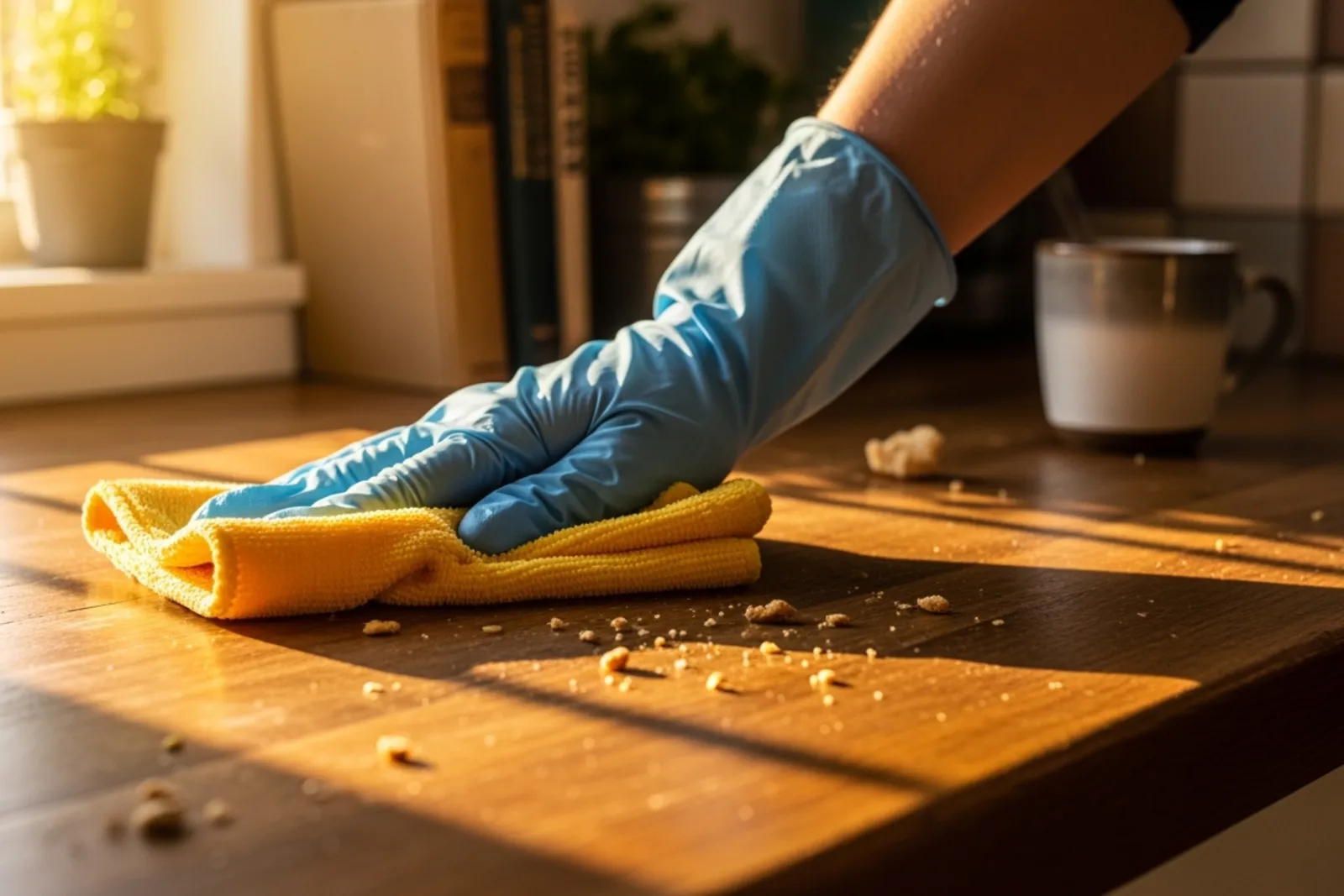
If you spray over crumbs, flour, coffee grounds, or dried herbs, you turn them into paste. Then you are wiping longer for no good reason. Before using any cleaner, do a fast dry pass. Shake out a dish mat, brush crumbs into your hand or a dustpan, and use a dry microfiber cloth on loose debris.
Then move to wet cleaning.
The same rule works on floors. Sweep or vacuum first. Mop second. On counters, remove crumbs first. Wipe second. It is such a small habit, but it cuts down on smearing, especially around the stove and prep zones.
Use fewer products, but use the right ones
A lot of people have too many kitchen cleaners and still struggle to get good results. Usually you can do most of the work with a short lineup:
Dish soap and warm water
Microfiber cloths
Baking soda
A soft scrub brush or old toothbrush
A gentle degreaser
Glass cleaner or a vinegar-free stainless cleaner
A floor cleaner that matches your floor type
If you prefer low-tox cleaning or plant-based cleaning, that can work very well in a kitchen. The trick is to match the product to the mess. Plant-based cleaning sprays are often great for food splatters, light grease, and daily wipe-downs. For baked-on grease, you may need something stronger or more dwell time. People often blame the cleaner when the real problem is that they sprayed and wiped too fast.
One safety note matters more than any product recommendation: never mix bleach with vinegar, ammonia, or other cleaners. That is not a shortcut. It is dangerous.
Do a 10-minute daily reset
If you only adopt one habit from this post, make it this one. A short reset keeps dirt from turning into stuck-on grime.
Here is a realistic daily routine:
Clear and wipe the counters.
Wash or load dishes.
Wipe the stove top and the area behind it.
Clean the sink and faucet.
Sweep the obvious crumbs from the floor.
That is it. You do not need to deep clean the fridge every night. You do not need to polish everything until it shines. You just need to stop today’s mess from becoming next week’s problem.
Families usually notice the biggest difference when they stop leaving grease on the stove, moisture around the sink, and crumbs near the kickplates. Those three spots make a kitchen look dirty fast.
Countertops need different care depending on the material
This is where people get into trouble. A spray that is fine on laminate may be a bad idea on marble or quartzite. A rough scrub pad that helps with a cheap baking tray can scratch a finished surface you actually care about.
Laminate counters
Laminate is pretty forgiving. Warm water, a little dish soap, and a microfiber cloth handle most daily messes. For sticky spots, let the soapy cloth sit for a minute before wiping. Do not soak seams. Water can sneak into edges and cause swelling over time.
Quartz counters
Quartz is low-maintenance, but it still does best with mild cleaners. Use warm water, dish soap, or a pH-balanced surface cleaner. Avoid harsh degreasers unless the manufacturer says they are safe. Also avoid leaving strong chemicals sitting on the surface.
Granite, marble, and other natural stone
Natural stone cleaning needs more care than people expect. Acidic products like vinegar or lemon can dull or etch some stone, especially marble. That is why "natural" does not always mean "safe." A homemade vinegar spray may sound gentle, but on the wrong countertop it is a bad trade.
For natural stone cleaning, use a stone-safe cleaner or mild soap and water, then dry the surface with a clean cloth. Drying matters. It helps prevent streaks and water marks, and it is easier on the finish.
If you have high-end finishes, a little caution goes a long way. The same is true for millwork care around painted cabinets, custom trim, and wood details. Too much water, too much scrubbing, or overly strong products can wear the finish long before you notice.
The dirtiest kitchen surfaces are often the ones you touch, not the ones you see
People focus on counters because they are visible. Fair enough. But the spots that collect the most grime are usually handles, knobs, switches, and cabinet pulls.
Think about how often you touch the fridge handle with raw chicken hands, open a drawer while cooking, or tap the faucet with sauce on your fingers. Those are high-contact areas, and they get sticky quietly.
Once or twice a week, wipe:
Cabinet and drawer pulls
Fridge and freezer handles
Faucet and sprayer
Light switches
Oven controls
Pantry handles
Trash can lid and rim
A damp microfiber cloth with a little dish soap works for most of these. Dry metal hardware after cleaning so you do not leave water spots behind.
Grease builds up where you stop looking
The stove gets attention. The cabinet above the stove often does not. Same for the backsplash edges, range hood exterior, and the side of the fridge facing the cooking zone.
Kitchen grease is sneaky. It floats, settles, and grabs dust. That is why some surfaces feel tacky even when nobody spilled on them directly.
To remove light grease, spray a gentle degreaser or soapy water onto a cloth, not straight onto delicate surfaces. Wipe in overlapping passes. For heavier buildup, let the product sit for a minute or two. Then wipe. Then wipe again with plain water if the cleaner leaves residue.
If you have painted cabinets or custom woodwork, go easy. Millwork care is less about aggressive scrubbing and more about controlled moisture and patience. I would much rather wipe a cabinet twice with a mild cleaner than once with something too harsh.
Your sink can be clean and still smell bad
This annoys people because it feels unfair, and honestly, it kind of is.
A stainless sink may look decent while the drain or disposal hides the real problem. Food bits, grease, coffee residue, and soap film collect below the surface. So if your kitchen smells "off," start there.
For the sink basin, use dish soap and a soft sponge daily. For a deeper clean, sprinkle baking soda, scrub gently, and rinse well. Drying the sink after cleaning makes a bigger visual difference than most people expect. It cuts water spots and leaves the metal brighter without extra product.
For the drain or garbage disposal, try this:
Run cold water during and after disposal use
Grind small pieces of citrus peel occasionally if your unit manufacturer allows it
Use a disposal brush or long bottle brush around the rubber splash guard
Flush with dish soap and cold water
That rubber guard is often the smell source, not the blades. People skip it because they do not want to touch it. I get it. But it needs attention.
Clean the microwave before it becomes a science project
Microwaves are easiest to clean when the mess is fresh, and somehow that is exactly when no one wants to do it.
If food is splattered inside, fill a microwave-safe bowl with water and heat it until the interior gets steamy. Let it sit for a minute with the door closed. Then wipe the walls, ceiling, and turntable with a cloth. Steam loosens dried sauce and saves you from scraping.
Do not forget the door edges and control panel. Those spots collect fingerprints and food film quickly.
The oven is less forgiving. If you have spills on the bottom, tackle them sooner rather than later. Burnt sugar and oil only get worse with heat cycles. Remove loose debris, use an oven-safe cleaner that matches the appliance finish, and ventilate the area well.
The stovetop deserves its own routine. Gas grates, electric coils, and glass tops all need slightly different care, but one rule is universal: do not use rough pads unless the manufacturer says you can. A scratched glass cooktop is a miserable trade for one stubborn spot.
Fridge cleaning is mostly about prevention
A fridge gets gross in layers. First a tiny leak from berries. Then a sticky shelf corner. Then an old sauce bottle leaves a ring. Two weeks later, the whole shelf feels suspect.
The easiest fix is simple. When you put groceries away, take ten seconds to toss wilted produce and wipe obvious drips. That tiny habit cuts deep cleaning time a lot.
For a more thorough fridge clean:
Remove food shelf by shelf instead of emptying the whole thing at once.
Toss expired items.
Wash shelves and drawers with warm, soapy water.
Dry everything before putting it back.
Wipe bottle bottoms and condiment lids before returning them.
I also think lining the crisper drawer with a washable mat is underrated. It catches the little bits that turn into sludge at the worst possible time.
Floors need a different approach than counters
Kitchen floors collect a strange combination of dry crumbs and oily film. If your floor still looks dull after mopping, there is a good chance you are pushing grease around instead of removing it.
Sweep or vacuum thoroughly first, especially near kickplates, under stools, and along baseboards. Then use a floor cleaner made for the material you have. Too much product can leave residue, and too much water can damage some floors.
Tile is sturdy, but grout likes to trap dirt. Vinyl is easier to maintain, but it can show film if the cleaner is too concentrated. Hardwood or engineered wood in kitchens needs careful moisture control. Damp mop, not wet mop.
Also, wash your mop heads or pads more often than you think. A dirty mop does not clean. It just redistributes yesterday.
Low-tox cleaning works best when habits do the heavy lifting
A lot of households want low-tox cleaning or pet-safe cleaning in the kitchen, and I understand why. It is the room where food is prepared, kids climb onto stools, and pets wander in hoping something hits the floor.
The good news is that many kitchen messes respond well to simple, lower-tox methods if you stay consistent. Dish soap, warm water, microfiber, baking soda, and plant-based cleaning sprays can handle most daily buildup. The catch is that they are not magic. If grease has been sitting for a month, even a good pet-safe cleaning product may need repeat passes.
That is where routine matters more than brand names.
If you wipe spills quickly, dry surfaces after cleaning, and keep grease from hardening, you can keep the kitchen in good shape without reaching for the harshest product every time.
The weekly jobs that stop "mystery grime"
Daily resets do a lot, but a few weekly tasks make a real difference:
Wipe cabinet fronts near the stove
Clean the microwave inside and out
Sanitize the trash can lid and surrounding wall
Mop the floor properly
Wipe small appliances you touch often
Check the fridge for spills and old food
Then, once a month or so, go deeper. Pull out the toaster crumbs. Wipe the top of the fridge. Clean the range hood exterior. Check under the sink for leaks, drips, or product buildup. Those are the jobs that prevent the weird smells and sticky corners people cannot quite place.
A few mistakes make kitchen cleaning harder than it needs to be
One is using too much cleaner. More soap does not always mean more clean. Sometimes it just means more residue and more rinsing.
Another is spraying every surface the same way. Glass, stone, stainless steel, painted wood, and sealed counters do not all want the same treatment.
Another is waiting too long. Fresh mess wipes off. Old mess fights back.
And one more, because I see this constantly in real life: using a beautiful-smelling spray but never changing the cloth. If the cloth is greasy, you are smearing grease. The scent does not change that.
A clean kitchen does not have to look perfect
This part matters.
A useful kitchen is going to get used. There will be crumbs after breakfast, fingerprints on the fridge, and a pan soaking in the sink sometimes. That is normal. The goal is not to make the room look untouched. The goal is to keep it sanitary, manageable, and easy to reset.
If your kitchen has been neglected for a while, start small. Clear one counter. Clean the sink. Wipe the stove. Sweep the floor. That is enough for day one. Once the sticky layer is gone, maintenance gets much easier.
Kitchen cleaning is one of those jobs that punishes avoidance and rewards consistency. I do not love that fact, but it is true. The upside is that a few good habits, done often, beat the occasional marathon clean almost every time.