
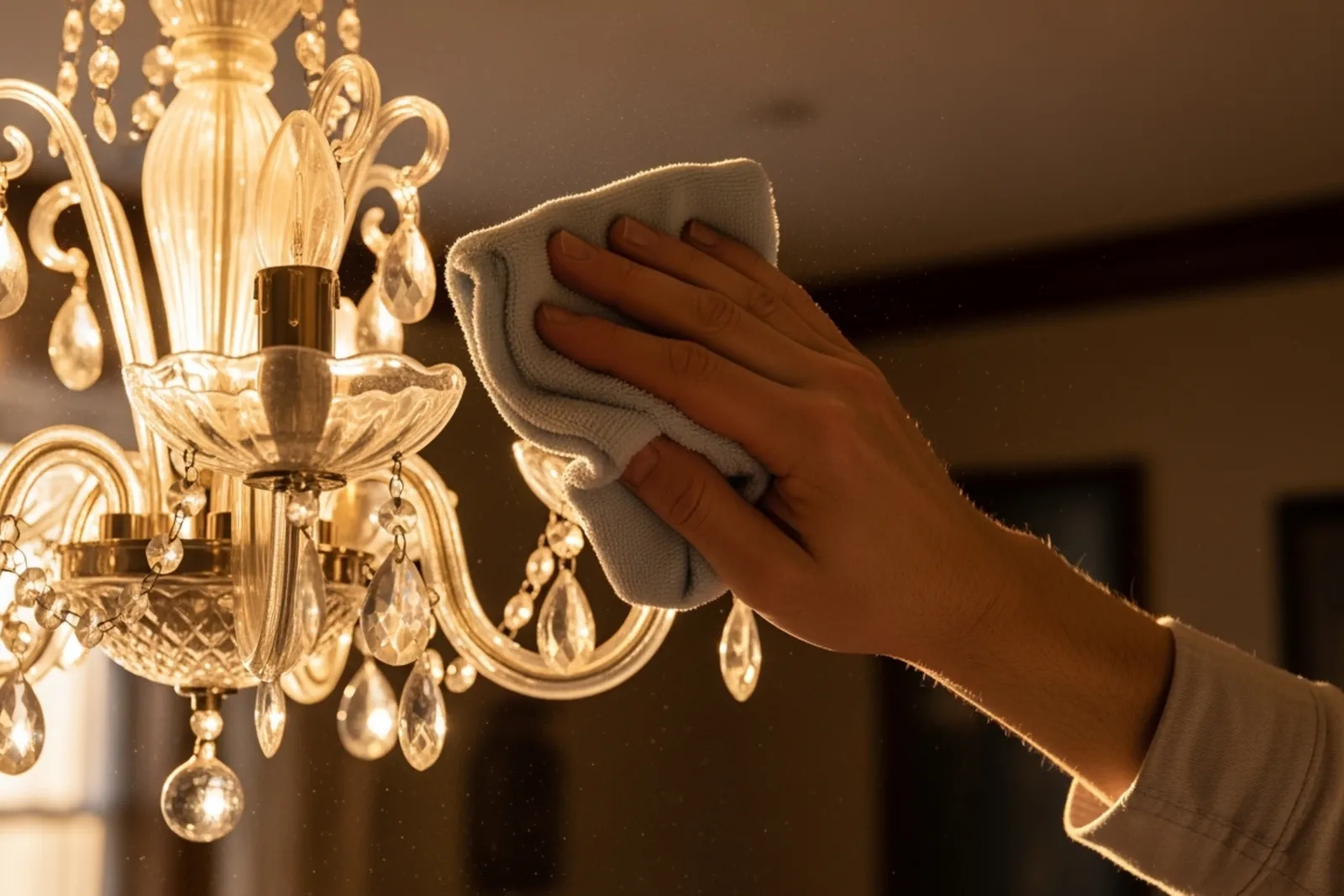
Light Fixtures Dusting: How to Clean Them Safely and Keep Dust From Taking Over
Learn light fixtures dusting the safe way to remove grime, boost brightness, and reduce dust at home. Read these easy cleaning tips today.
July 25, 2026
Light fixtures are easy to ignore until you switch on the light and notice the truth all at once. A dull film on the glass. Dust hanging off the edges. Dead bugs in the bowl shade. It is not glamorous cleaning, but it makes a real difference.
A dusty fixture does more than look neglected. It can block light, make a room feel dim, and spread fine dust every time air moves through the space. If anyone in your home deals with allergies, that layer up near the ceiling matters more than people think.
The good news is that light fixtures usually do not need harsh products or a complicated routine. A careful approach, a few basic tools, and a little patience are enough for most homes.
Why light fixtures collect so much dust
Dust loves places we rarely touch. Light fixtures are perfect for it.
They sit high up, which means they get missed during regular home cleaning. Warm bulbs can attract and bake on dust over time. In kitchens, that dust mixes with grease and turns sticky. In bathrooms, humidity makes grime cling to glass and metal. In entryways and hallways, every opened door sends a fresh wave of dirt into the air.
If you are doing deep cleaning, move-in move-out cleaning, or post-renovation cleanup, fixtures often end up being one of the dirtiest forgotten spots in the room. Renovation dust is especially sneaky. It is fine, powdery, and gets into every seam, screw, and decorative groove.
I think this is why people feel disappointed after cleaning a room sometimes. The counters are wiped, the floors are done, but the space still feels a little off. Then you look up.
What dust on light fixtures actually affects
This is not just about appearance.
A dusty shade or globe can cut down the amount of light in a room. You may not notice it day to day, but after cleaning, the room often looks brighter even with the same bulbs. That matters in kitchens, workspaces, stairwells, and offices where clear lighting helps with safety and comfort.
There is also indoor air quality. Every time a ceiling fan runs nearby, a window opens, or someone walks through the room, some of that dust shifts. If the fixture has open ledges or curled decorative details, it can hold more than you expect.
Then there is heat. Dust on bulbs and around vents in certain fixtures is not ideal. It usually will not create drama overnight, but thick buildup around lighting is something to take seriously, especially in older fixtures or in commercial cleaning settings where lights run for long hours.
What you need before you start
You do not need a full kit of specialty products. Most fixtures can be cleaned with basic supplies:
A stable step stool or ladder
Two microfiber cloths, one dry and one slightly damp
A soft duster or clean paintbrush for crevices
Warm water with a small amount of mild soap
A dry towel for polishing and drying parts
Optional, a gentle low-tox or plant-based cleaning spray for sticky grime
If you use a spray, spray the cloth, not the fixture. This is one of those small habits that prevents a lot of problems. Liquid dripping into wiring is not worth the risk.
For homes with kids, pets, or scent sensitivity, low-tox cleaning and pet-safe cleaning products make sense here. You are cleaning an overhead surface, so you want simple products that do the job without leaving strong residue behind.
The safest way to dust most light fixtures
Start simple. Do not rush, and do not clean a warm fixture.
1. Turn the light off and let it cool completely
This sounds obvious, but people skip it. Bulbs get hot, and glass shades can crack if you introduce moisture too soon. Give the fixture time to cool.
If you are removing parts or cleaning close to exposed bulbs, switch off power at the wall. For anything more involved, especially older fixtures, switching off the breaker is the safer call.
2. Dust first, before using any moisture
Use a dry microfiber cloth, a soft duster, or a clean brush to remove loose dust. If you start with a damp cloth right away, you can turn light dust into a muddy film. Dry removal first is faster and cleaner.
3. Remove detachable pieces if it is easy and safe
Glass globes, shades, and trays often come off. If they do, set them on a towel in the sink or on a counter before cleaning. This gives you more control and lowers the odds of dropping something while balancing on a ladder.
4. Wash gently
Use warm water and a drop of mild soap for glass and many painted surfaces. Wipe, rinse if needed, and dry fully before reinstalling. For metal finishes, be more cautious. Some plated surfaces scratch easily, and some finishes spot if left wet.
5. Wipe bulbs and surrounding hardware carefully
A dry microfiber cloth is usually enough for bulbs. Keep moisture away from sockets and wiring. If a bulb is dusty enough that you are tempted to scrub it, go slowly and make sure it is cool.
6. Reassemble only when everything is dry
This part matters. Even a little trapped moisture can leave streaks, attract fresh dust, or cause trouble near electrical parts.
How to clean different types of fixtures
Not every light fixture wants the same treatment. This is where people get frustrated. One method works beautifully on a glass dome and badly on a fabric shade.
Ceiling-mounted glass dome fixtures
These are common in hallways, bedrooms, and older rentals. They also collect the classic mix of dust and dead bugs.
Usually the glass bowl is held in place by a center finial or a few side screws. Support the glass with one hand while loosening it with the other. Wash the glass in warm soapy water, dry it well, and dust the base before putting it back.
Do not overtighten hardware when reinstalling. That is how glass gets stressed and chipped.
Chandeliers and pendant lights
These look dramatic when clean and depressing when dusty.
For regular upkeep, dusting in place with a microfiber cloth or soft duster works. For deeper cleaning, wipe each arm, bulb base, and hanging piece individually. If the fixture has crystals, less product is usually better. Too much moisture can leave spots.
I would avoid the old habit of spraying everything and hoping gravity handles the rest. It mostly creates drips.
If the chandelier is high, heavy, or expensive, this may be one of the times to bring in help. The same goes for luxury home cleaning situations with delicate finishes or custom fixtures.
Recessed lights
Recessed lights do not always look dusty from below, but the trim rings and surrounding ceiling area often hold grime.
Make sure the light is off and cool. Wipe the outer trim with a dry cloth first, then a lightly damp one if needed. Keep water away from the inside of the housing. If bugs or dust have collected behind the trim and you are not sure how the unit comes apart, stop before forcing anything.
Fabric or paper shades
These need a lighter touch than people expect.
Most fabric shades should be dusted only, using a clean microfiber cloth, lint roller, or upholstery brush attachment on low suction. Wet cleaning can stain or warp them. Paper shades are even less forgiving.
If a shade is badly yellowed or greasy, replacement may be the better answer.
Metal fixtures
Brass, bronze, black, chrome, and painted finishes all react differently. Start with dry dusting. Then use a barely damp cloth and dry immediately. Skip abrasive scrubbers entirely.
If you are not sure what the finish is, test a hidden area first. I know that sounds fussy, but it is less annoying than discovering you stripped the surface near the front door light.
Bathroom vanity lights
These get hit with a mix of dust, hairspray, toothpaste mist, and humidity. A dry cloth alone usually will not cut it.
Remove loose dust first, then wipe with a mild soap solution or a gentle plant-based cleaning product on a cloth. Dry the metal and glass well to avoid streaking. If the fixture is near a mirror, finish by buffing both surfaces so the whole area looks evenly clean.
How often should you dust light fixtures?
There is no perfect universal schedule, but this is a practical starting point.
In most homes, light fixtures do well with a quick dust every month or two and a deeper clean a few times a year. Kitchens and bathrooms often need attention sooner. Homes with pets, open windows, fireplaces, or nearby construction usually build up dust faster.
After post-construction cleanup or renovations, check every fixture. Fine drywall dust settles on tops of shades, inside glass bowls, and around bulb sockets. It can linger long after the rest of the room looks finished.
For office cleaning and commercial cleaning, fixture schedules depend on traffic, ceiling height, and the kind of work happening in the space. Reception areas, washrooms, and break rooms usually show buildup fastest.
Common mistakes people make
This part is worth mentioning because most fixture problems come from cleaning, not from dust itself.
The first mistake is cleaning while the fixture is still warm. That risks burns, streaking, and damaged glass.
The second is using too much liquid. Fixtures are electrical. Even when the power is off, you want moisture controlled and targeted.
The third is forgetting to dry everything fully. Water spots on glass are annoying. Moisture near hardware is worse.
Another common one is using the wrong cloth. Paper towels can leave lint and scratch some finishes. Microfiber is boring, but it works.
And then there is ladder behavior. If you need to lean way out, the ladder is in the wrong place. Move it. This is not the task to improvise your balance skills.
A few smart habits that keep fixtures cleaner longer
You do not need to deep clean every fixture constantly. A few habits cut down the buildup.
Dust high surfaces before low ones during your regular residential cleaning routine. If you clean shelves and floors first, then knock dust off the fixture, you are doing the room twice.
Run kitchen exhaust fans when cooking. Greasy air sticks to nearby pendant lights faster than most people realize.
Keep bathroom ventilation working well. Less lingering moisture means less grime clinging to vanity lights.
Change HVAC filters on schedule. This does not eliminate dust, but it helps.
And if you are already on a ladder for smoke detector batteries or seasonal tasks, give nearby fixtures a quick once-over. Tiny maintenance windows save a lot of scrubbing later.
When it makes sense to call a professional
Some fixture cleaning is straightforward. Some of it really is not.
If the fixture is very high, very fragile, unusually intricate, or attached to a tall stairwell, there is no shame in outsourcing it. Same for fixtures with delicate glass drops, custom finishes, or hard-to-reach bulbs. In those cases, safety matters more than saving a bit of time.
Professional help also makes sense during move-in move-out cleaning, deep cleaning before guests or events, and post-renovation cleanup when overhead dust is heavy throughout the property. In larger homes, high-end residences cleaning often includes detailed fixture dusting because those surfaces affect the whole look of the room.
For landlords and property managers, fixture cleaning is one of those details that changes how clean a unit feels during a showing. Tenants may not say, "the hallway dome light was dusty," but they absolutely notice when a place feels dim or neglected.
The bottom line
Light fixture dusting is one of those small jobs that punches above its weight. Clean fixtures give you better light, less visible dust, and a room that feels finished instead of halfway done.
If you remember only a few things, remember these: turn the light off, let it cool, dust dry first, use very little moisture, and respect anything fragile or high up.
Most of the time, that is enough. And when it is not, looking up is still the right place to start.