
Vinegar Cleaning 101 for Kitchens: Where It Works, Where It Doesn’t, and How to Use It Safely
Learn where vinegar cleaning for kitchens works, where it doesn't, and how to use it safely. Read practical tips from Clean By Gina today.
July 25, 2026
Vinegar has a bit of a reputation problem. Some people treat it like a miracle cleaner that can do anything. Others swear off it because they once used it on the wrong surface and ended up with a dull spot that never quite looked right again.
The truth sits in the middle. Vinegar is useful. Very useful, actually. But it has a narrow skill set. It shines when you use it for the jobs acidity is good at, and it disappoints when you expect it to sanitize everything, cut every kind of grease, or play nicely with every surface in your kitchen.
If you understand what vinegar is doing, kitchen cleaning gets a lot simpler.
What vinegar is, and what it actually does
Household white vinegar is mostly water with a small amount of acetic acid, usually around 5 percent. Cleaning vinegar is a little stronger, often about 6 percent acidity. That sounds like a tiny difference, and chemically it is, but in real cleaning it can make scale and soap residue loosen up faster.
That acidity is the whole story.
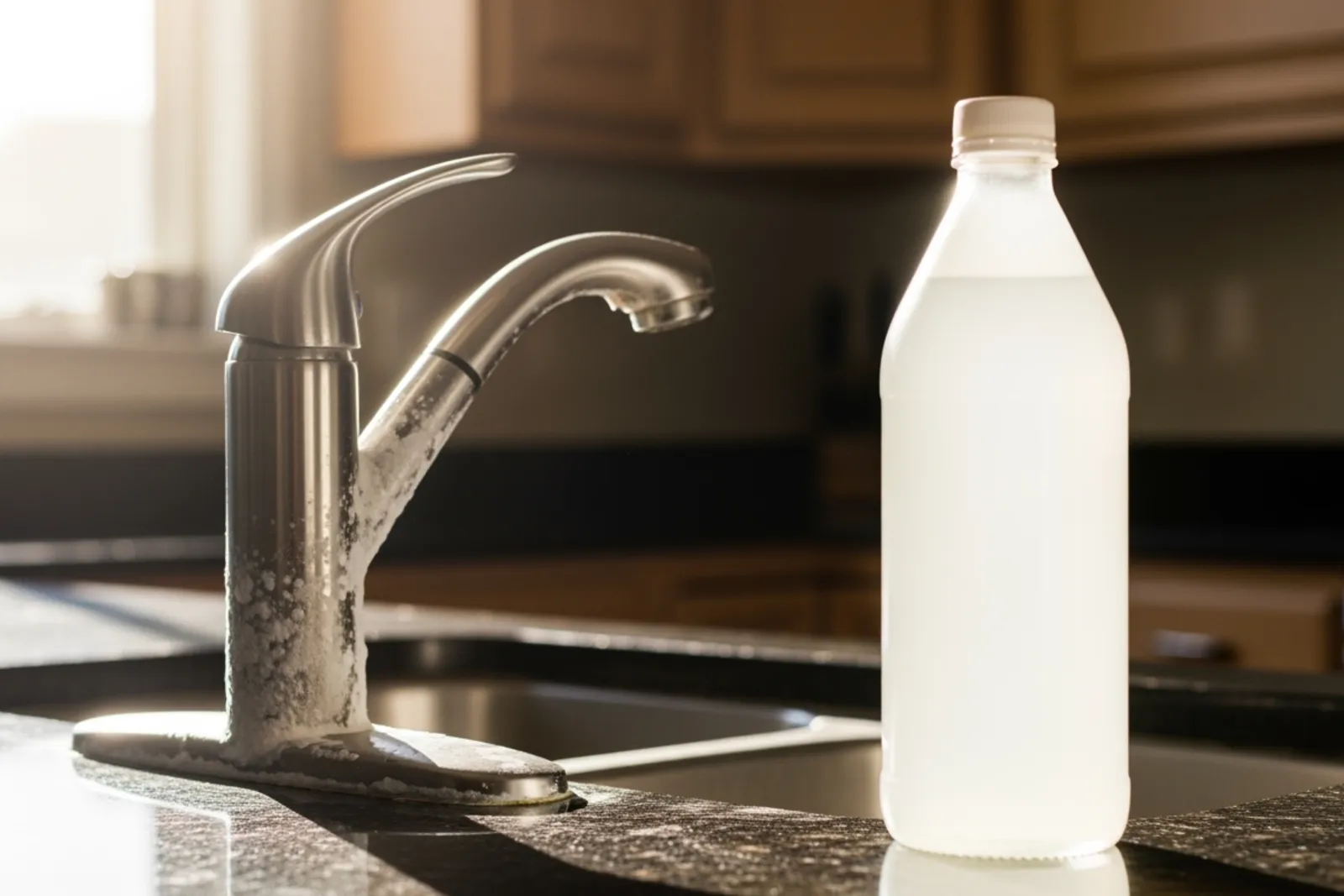
Vinegar works well on alkaline buildup, especially mineral deposits left behind by hard water. If you’ve ever seen chalky white crust around a faucet or cloudy spots on a sink, vinegar is often a good fit because acid helps break that buildup down. It can also help loosen soap scum and some light grime.
What it does not do well is everything else people claim online.
Vinegar is not a strong degreaser. For greasy stovetop splatter, cooking oils, or sticky food residue, a dish soap solution usually does better. Vinegar is also not a broad-spectrum disinfectant in the way many people assume. It can reduce some germs in some situations, but it is not a substitute for a proper disinfectant when that is the goal. And deodorizing? Sort of. It can neutralize some odors, especially sour or mineral-related smells, but it does not magically erase every kitchen smell.
I think this is where people get frustrated. They use one product for the wrong problem, then decide the product itself is bad. Vinegar is not bad. It’s just specific.
Why acidity helps with some kitchen messes
A lot of kitchen buildup is not “dirt” in the everyday sense. It’s residue.
Mineral deposits form when water evaporates and leaves calcium and magnesium behind. Soap scum happens when soap reacts with minerals in water. In both cases, acidity helps dissolve or loosen the material so you can wipe it away. That’s why vinegar tends to be much better on a crusty faucet than on a greasy range hood.
This also explains why dwell time matters. Vinegar usually needs a few minutes to work on mineral scale. If you spray it on and immediately wipe it off, you may not see much happen. People often decide a cleaner failed when really they just didn’t give the chemistry time to do its job.
The best kitchen uses for vinegar
Used in the right places, vinegar is practical and cheap. It is especially good for maintenance cleaning, where you’re dealing with light buildup before it gets stubborn.
Countertop wipe-downs, but only on the right materials
Vinegar can work well on some laminate, sealed solid-surface, ceramic tile, and other non-porous kitchen surfaces. A diluted mix is usually enough for a routine wipe-down, especially if the goal is to remove light residue and leave the area feeling fresh.
For day-to-day use, a mix around 1 part white vinegar to 3 or 4 parts water is often plenty. If the counter has splashes or faint mineral spotting near the sink, that dilution usually handles it.
Still, this is where people get into trouble, because “countertop” is too broad a category. Stone counters are a different story, and I’ll get to that in a minute. Even among man-made surfaces, finishes vary. If you don’t know exactly what the surface is, test in an inconspicuous spot first and check the manufacturer’s care instructions if you still have them.
After wiping with vinegar, go over the surface with a clean damp cloth, then dry it. That extra step helps prevent streaks and stops the vinegar smell from lingering longer than necessary.
Sink cleaning and deodorizing
Vinegar works nicely in many kitchen sinks, especially stainless steel or porcelain, when the problem is light mineral film, water spots, or drain-area odors. It is less helpful for heavy grease. For greasy sink buildup, start with dish soap and warm water, then bring in vinegar if you still see hard-water marks.
A simple method is to spray or wipe on diluted vinegar, let it sit briefly, then scrub with a soft sponge or cloth. Rinse well and dry the sink so spots don’t come right back.
For odor near the drain, vinegar can help freshen the area, though it is not fixing the plumbing itself. If a sink smells persistently bad, food buildup deeper in the drain or garbage disposal is usually the real issue.
Faucet and aerator descaling
This is one of vinegar’s best jobs.
If your faucet has white crust at the base or mineral buildup around the spout, vinegar can soften it enough to wipe or brush away. The same goes for faucet aerators, which often clog gradually and reduce water flow.
For light scale, soak a cloth in vinegar, wrap it around the affected area, and let it sit for several minutes. For heavier buildup, you may need more time. If you remove the aerator, soaking it separately in diluted vinegar is often easier than trying to clean it in place.
Once the scale loosens, scrub gently with a soft brush, rinse thoroughly, and dry. Be careful with plated finishes, though. Some decorative coatings do not react well to acid exposure, especially repeated exposure. If the fixture has a specialty finish, patch test first or skip vinegar and use the manufacturer’s recommended cleaner.
Microwave steam cleaning
This is the vinegar trick people tend to love because it feels low effort, and for once the internet hype is mostly right.
Add water and a small amount of white vinegar to a microwave-safe bowl, then heat it until it steams well. Leave the door closed for a few minutes so the steam can soften dried-on splatters. After that, wipe the interior with a soft cloth or sponge.
A common ratio is about 1 cup of water to 1 or 2 tablespoons of vinegar. You do not need much. More vinegar does not make the steam dramatically better, but it does make the smell stronger.
What this method really does is soften food mess so it releases more easily. That matters. The steam is doing most of the heavy lifting, and the vinegar helps with odor and light residue.
When not to use vinegar in the kitchen
This part matters just as much as knowing where vinegar works. Acid is helpful on the right surface and rough on the wrong one.
Natural stone
Do not use vinegar on marble, limestone, travertine, or other acid-sensitive stone. The acid can etch the finish, leaving dull patches or light marks that look cloudy and permanent. Granite is often spoken about as if it’s automatically safe, but that’s too casual for me. Some granite is more resistant than marble, yes, but many stone surfaces still have sealers or polished finishes that do not benefit from acidic cleaners.
If you have stone counters, backsplashes, or flooring, skip vinegar and use a cleaner made for natural stone cleaning.
Certain metals and specialty finishes
Vinegar can be problematic on aluminum and on some plated or decorative fixtures. It may dull, discolor, or wear certain finishes over time. Copper and brass are trickier because people do use acidic cleaners on them, but kitchen fixtures are rarely simple bare metal. They often have coatings, lacquer, or mixed finishes.
If you are not completely sure what the finish is, caution is the better move.
Unsealed grout and waxed or oiled wood
Unsealed grout can absorb acidic liquid and weaken or discolor over time. Even sealed grout should not be soaked carelessly. A quick wipe might be fine in some situations, but regular use is not something I’d recommend without knowing the condition of the surface.
Waxed wood and oiled wood also deserve better than vinegar. Acid can strip or dull protective finishes, and too much moisture is already a problem for wood in kitchens. Use wood-safe cleaners instead.
Electronics and delicate coatings
Do not spray vinegar directly onto screens, appliance control panels, or touch surfaces with sensitive coatings. Even when the material itself seems durable, the coating often is not. If a manufacturer recommends only a damp microfiber cloth, believe them. This is one of those cases where “natural” does not mean “safe for everything.”
Dilution and dwell time: the part people skip
Most vinegar cleaning problems come down to two mistakes. People either use it too strong on the wrong surface, or too weak and too quickly on the right one.
For light cleaning, a mild dilution is usually enough. Think 1 part vinegar to 3 or 4 parts water for wipe-downs and routine maintenance on compatible surfaces.
For heavier mineral deposits, you can go stronger, sometimes even using vinegar nearly full strength on removable parts like an aerator, but that does not mean every surface should get the same treatment. Strength should match the mess and the material.
Then there’s dwell time. On scale, vinegar often needs several minutes. On really stubborn buildup, it can need longer, with periodic checking. The goal is to loosen residue, not bathe the surface indefinitely. Prolonged contact raises the chance of damage, especially on finishes you’re not sure about.
Rinsing matters too. After using vinegar, wipe with clean water and dry with a soft cloth. That prevents streaks, removes loosened residue, and cuts the smell.
If you remember only one practical rule, make it this: use the mildest effective dilution, leave it only as long as needed, then rinse and dry.
Safety and compatibility basics
Vinegar is common, but that does not mean it is harmless.
The smell can be irritating in a small kitchen, especially if you’re heating it or using a stronger cleaning vinegar. Open a window if you can, or run a fan. If you have sensitive skin, wear gloves. If it splashes in your eyes, rinse thoroughly with water right away.
The big warning is mixing. Never mix vinegar with bleach. That can create chlorine gas, which is dangerous to breathe. It is not one of those overly cautious labels people ignore. It matters.
Be careful about layering products in general. If a surface was cleaned with something else first, rinse it before using vinegar. That’s especially true around drains, where leftover cleaner may still be present.
Patch testing is worth the extra minute. Choose a hidden spot, apply a small amount, wait, wipe, and check for dulling, discoloration, softening, or other changes. If the surface reacts badly in a hidden place, it will react badly in a visible place too.
White vinegar, cleaning vinegar, and apple cider vinegar
For kitchen cleaning, plain white vinegar is the usual choice. It is clear, inexpensive, and less likely to leave color or residue behind.
Cleaning vinegar is stronger and can be more effective on scale and stubborn buildup, but that extra acidity also means less margin for error. Use it more carefully, and not as your default spray for every surface.
Apple cider vinegar is not the better “natural” option here. It has color, a stronger lingering smell for many people, and can leave more residue. Save it for cooking.
One more practical note: transfer vinegar only into safe, clearly labeled containers. Glass is fine. Many common plastic spray bottles are fine too, as long as they’re intended for household cleaners. Avoid reactive metal containers.
Managing the smell without making things weird
A lot of people can tolerate vinegar but still hate the smell. Fair enough. It fades, but not instantly.
The simplest fixes are the boring ones: use less, dilute it properly, rinse after cleaning, and let the room air out. Heating vinegar for microwave cleaning will make the smell more noticeable for a short time, so a cracked window helps.
I’m cautious about DIY scent boosters. People often add essential oils because they want the cleaner to smell nicer, but oils can leave residue on surfaces and are not always ideal around food-prep areas. If you do add anything, keep it minimal and make sure the surface gets rinsed. Honestly, plain white vinegar used sparingly and followed by a rinse usually smells less offensive than a homemade potion that lingers all afternoon.
A sensible way to think about vinegar in the kitchen
Vinegar is best treated like a specialist, not a hero product.
Use it for mineral scale, water spots, light soap residue, sink freshening, and steam-cleaning a microwave. Avoid it on natural stone, uncertain finishes, unsealed grout, waxed wood, and electronics. Dilute it for routine cleaning, give it time when you’re attacking scale, and always rinse and dry afterward.
That balanced approach is less dramatic than “vinegar cleans everything,” but it works better in real homes.
And maybe that’s the real lesson with kitchen cleaning in general. The best product is not the strongest or the most famous one. It’s the one that matches the mess, respects the material, and doesn’t create a second problem while solving the first.